Word Explanation
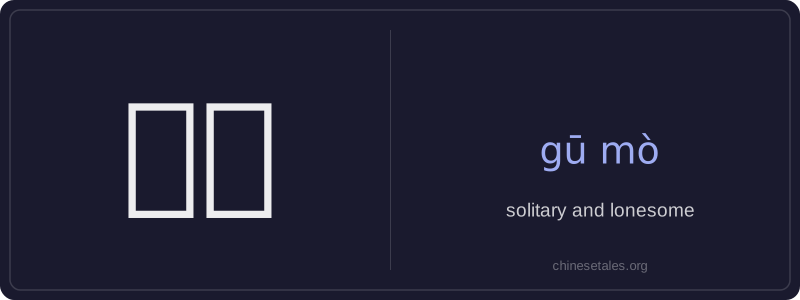
孤寞 (gū mò) is an evocative literary adjective meaning 'solitary and lonesome' — it conveys a deep, quiet sense of isolation that goes beyond simple loneliness. The first character, 孤 (gū), means 'orphaned', 'alone', or 'without support'; the second, 寞 (mò), intensifies this feeling with connotations of silence, emptiness, and stillness — like an unoccupied room or a deserted landscape. Together, they form a compound that emphasizes both physical separation and emotional desolation, often carrying poetic or melancholic weight.
This word is rarely used in casual speech; it appears most frequently in classical poetry, modern literature, or reflective writing to describe inner states during solitude, loss, or quiet contemplation. It’s more refined and somber than common synonyms like 孤单 or 寂寞, and tends to evoke imagery of vast natural spaces or introspective human moments — think of an old scholar reading alone at dusk, or a traveler watching snow fall in an empty courtyard.
Example Sentences
Related Words
国语
‘Guó yǔ’ literally means 'national language'—
无论谁
‘无论谁’ (wú lùn shéi) is a pronoun meaning
外语
‘外语’ literally means ‘outside language’ —
面条
‘面条’ (miàn tiáo) literally means ‘flour str
不对
不对 (bù duì) literally combines 不 (bù), meani
认为
‘认为’ (rèn wéi) is a transitive verb meaning
认同
‘认同’ (tóng rèn) is a verb meaning ‘to ident
中学
'Zhōngxué' literally combines 'zhōng' (middle)