Word Explanation
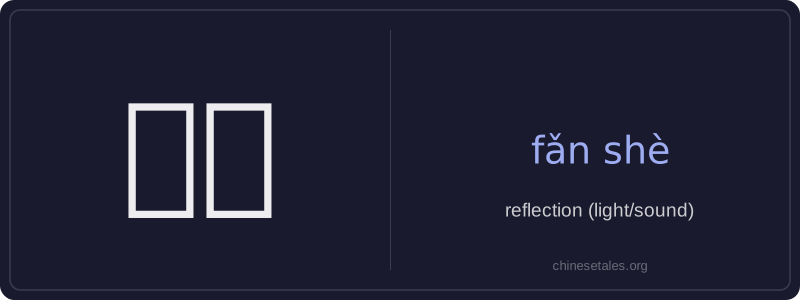
‘反射’ (fǎn shè) literally combines ‘反’ (fǎn), meaning 'back' or 'reverse', and ‘射’ (shè), meaning 'to shoot' or 'to emit'. Together, they describe the physical phenomenon where light, sound, or other waves bounce back after hitting a surface — i.e., reflection. It is used primarily in scientific and technical contexts, especially in physics, biology (e.g., neural reflexes), and engineering.
In everyday language, ‘反射’ appears in both literal and figurative senses: it can refer to optical reflection (e.g., sunlight reflecting off water), acoustic reflection (echoes), or even automatic physiological responses like the knee-jerk reflex. Unlike the more general word ‘反映’ (fǎn yìng), which means 'to reflect' metaphorically (e.g., to represent or mirror reality), ‘反射’ is strictly tied to physical wave behavior or involuntary biological responses. It is commonly found in textbooks, medical reports, and science discussions.
Example Sentences
Related Words
国语
‘Guó yǔ’ literally means 'national language'—
无论谁
‘无论谁’ (wú lùn shéi) is a pronoun meaning
外语
‘外语’ literally means ‘outside language’ —
面条
‘面条’ (miàn tiáo) literally means ‘flour str
不对
不对 (bù duì) literally combines 不 (bù), meani
认为
‘认为’ (rèn wéi) is a transitive verb meaning
认同
‘认同’ (tóng rèn) is a verb meaning ‘to ident
中学
'Zhōngxué' literally combines 'zhōng' (middle)