Word Explanation
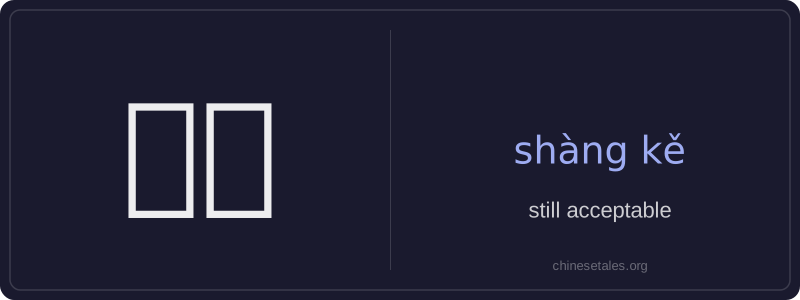
'Shàng kě' literally combines 尚 (shàng), meaning 'still' or 'yet', and 可 (kě), meaning 'can' or 'acceptable'. Together, they form a modest, formal expression meaning 'still acceptable' or 'passable' — implying something meets minimum standards but isn’t outstanding. It often carries a tone of restrained approval or gentle concession, common in evaluations of performance, quality, or conditions.
This phrase is frequently used in written or semi-formal spoken contexts — such as feedback on work, health reports, or product reviews — where the speaker wishes to acknowledge adequacy without enthusiasm. It’s more neutral and less positive than 好 (hǎo) or 很好 (hěn hǎo), and less negative than 差 (chā) or 不行 (bù xíng). Native speakers often use it to soften criticism or express qualified satisfaction, especially when higher expectations were possible.
Example Sentences
Related Words
国语
‘Guó yǔ’ literally means 'national language'—
无论谁
‘无论谁’ (wú lùn shéi) is a pronoun meaning
外语
‘外语’ literally means ‘outside language’ —
面条
‘面条’ (miàn tiáo) literally means ‘flour str
不对
不对 (bù duì) literally combines 不 (bù), meani
认为
‘认为’ (rèn wéi) is a transitive verb meaning
认同
‘认同’ (tóng rèn) is a verb meaning ‘to ident
中学
'Zhōngxué' literally combines 'zhōng' (middle)