Word Explanation
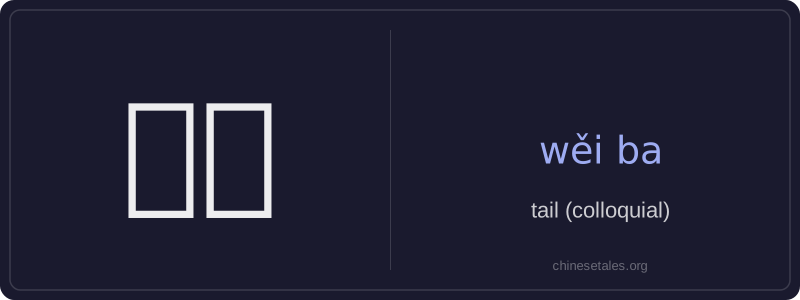
'Wěi ba' literally combines 尾 (wěi), meaning 'end' or 'tail', and 巴 (ba), a common diminutive or colloquial suffix that adds informality and softness. Together, they form the everyday, spoken-word term for 'tail' — used primarily when referring to animals (e.g., dogs, cats, monkeys) or in playful, figurative expressions. It’s warmer and more conversational than the formal literary term 尾 (wěi) alone or 尾部 (wěi bù), which is used in scientific or technical contexts.
This word rarely appears in formal writing or academic speech; instead, it thrives in daily conversation, children’s books, cartoons, and casual descriptions. You’ll hear it in phrases like '摇尾巴' (yáo wěi ba, 'to wag one’s tail') or '揪尾巴' (jiū wěi ba, 'to grab someone’s tail' — sometimes idiomatically meaning 'to catch someone out'). Its tone is friendly and approachable, making it ideal for talking to kids or describing pets affectionately.
Example Sentences
Related Words
国语
‘Guó yǔ’ literally means 'national language'—
无论谁
‘无论谁’ (wú lùn shéi) is a pronoun meaning
外语
‘外语’ literally means ‘outside language’ —
面条
‘面条’ (miàn tiáo) literally means ‘flour str
不对
不对 (bù duì) literally combines 不 (bù), meani
认为
‘认为’ (rèn wéi) is a transitive verb meaning
认同
‘认同’ (tóng rèn) is a verb meaning ‘to ident
中学
'Zhōngxué' literally combines 'zhōng' (middle)