Word Explanation
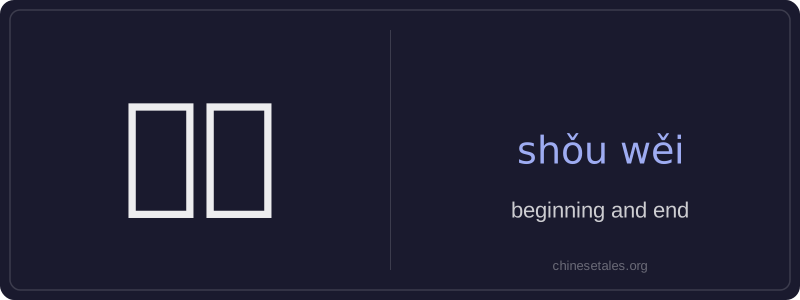
‘首尾’ literally combines ‘shǒu’ (head) and ‘wěi’ (tail), evoking the physical extremities of an animal or object — and by extension, the chronological or structural start and finish of anything. Though it originated from animal anatomy (e.g., describing a snake’s head and tail), it is now used abstractly to refer to the beginning and end of a process, story, period, or sequence. It emphasizes completeness and continuity, often implying that both ends must be considered together.
The term appears frequently in formal or literary contexts — such as essays, reports, or classical idioms — and carries a slightly elevated register. It’s commonly paired with verbs like ‘兼顾’ (to attend to both), ‘呼应’ (to echo each other), or ‘相接’ (to connect), highlighting coherence between start and finish. Unlike the more colloquial ‘开头和结尾’, ‘首尾’ suggests unity, symmetry, and holistic thinking — not just two separate points, but two interdependent parts of one whole.
Example Sentences
Related Words
国语
‘Guó yǔ’ literally means 'national language'—
无论谁
‘无论谁’ (wú lùn shéi) is a pronoun meaning
外语
‘外语’ literally means ‘outside language’ —
面条
‘面条’ (miàn tiáo) literally means ‘flour str
不对
不对 (bù duì) literally combines 不 (bù), meani
认为
‘认为’ (rèn wéi) is a transitive verb meaning
认同
‘认同’ (tóng rèn) is a verb meaning ‘to ident
中学
'Zhōngxué' literally combines 'zhōng' (middle)