Word Explanation
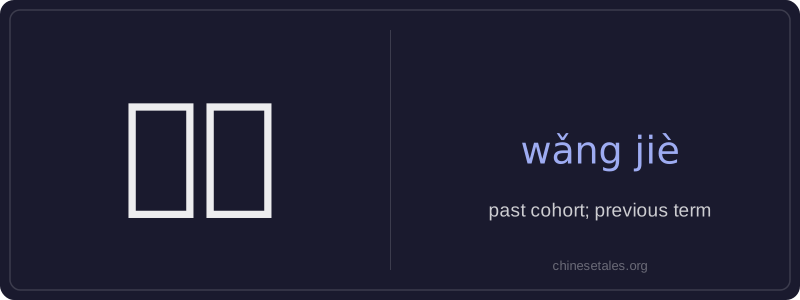
‘往届’ literally combines ‘往’ (wǎng), meaning ‘past’ or ‘former’, and ‘届’ (jiè), meaning ‘cohort’, ‘term’, or ‘session’—often used for graduating classes, academic years, or organized events like competitions or conferences. Together, it refers to people or things belonging to previous cohorts or editions, especially in educational or institutional contexts.
The term is commonly used to distinguish current students or participants from those who completed a program earlier—for example, ‘往届生’ means ‘graduates of previous years’, and ‘往届比赛’ means ‘past editions of a competition’. It carries no temporal specificity on its own (e.g., not ‘last year’ but ‘any prior year’), and is neutral in register—frequent in official notices, university websites, job postings, and academic forms.
Example Sentences
Related Words
国语
‘Guó yǔ’ literally means 'national language'—
无论谁
‘无论谁’ (wú lùn shéi) is a pronoun meaning
外语
‘外语’ literally means ‘outside language’ —
面条
‘面条’ (miàn tiáo) literally means ‘flour str
不对
不对 (bù duì) literally combines 不 (bù), meani
认为
‘认为’ (rèn wéi) is a transitive verb meaning
认同
‘认同’ (tóng rèn) is a verb meaning ‘to ident
中学
'Zhōngxué' literally combines 'zhōng' (middle)