Word Explanation
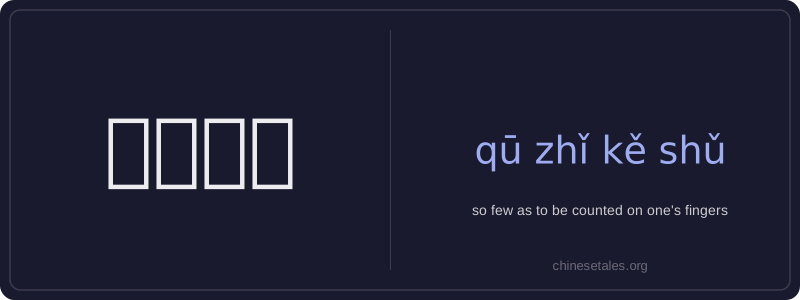
屈指可数 literally means 'bend fingers and can count' — it evokes the image of counting something so few that you only need to bend your fingers (i.e., use one hand) to tally them all. The four characters combine meaningfully: 屈 (to bend), 指 (finger), 可 (can), and 数 (to count). This idiom emphasizes extreme scarcity, not just small quantity — it implies rarity or exceptional exclusivity.
It’s commonly used in formal or literary contexts to describe people, things, or occurrences that are remarkably rare: elite experts in a field, historic milestones, or unique natural phenomena. While it sounds numerical, it functions adjectivally — always modifying a noun (e.g., 屈指可数的专家) and never used predicatively without a copula (e.g., *他屈指可数 is ungrammatical; say 他是屈指可数的专家 instead). It carries a slightly elevated, appreciative tone — suggesting value in rarity, not mere insufficiency.
Example Sentences
Related Words
国语
‘Guó yǔ’ literally means 'national language'—
无论谁
‘无论谁’ (wú lùn shéi) is a pronoun meaning
外语
‘外语’ literally means ‘outside language’ —
面条
‘面条’ (miàn tiáo) literally means ‘flour str
不对
不对 (bù duì) literally combines 不 (bù), meani
认为
‘认为’ (rèn wéi) is a transitive verb meaning
认同
‘认同’ (tóng rèn) is a verb meaning ‘to ident
中学
'Zhōngxué' literally combines 'zhōng' (middle)