Word Explanation
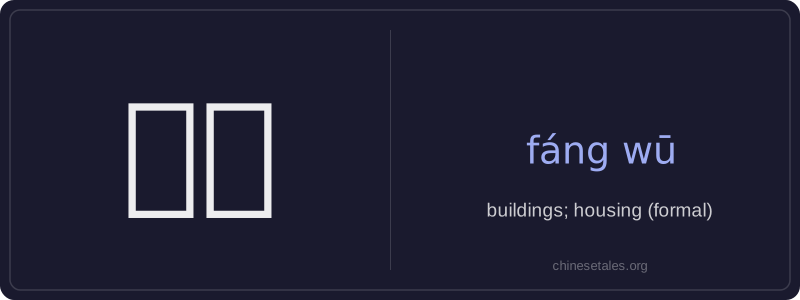
房屋 (fáng wū) is a formal, written noun meaning 'buildings' or 'housing'—especially referring to residential structures like houses, apartments, or other dwellings. It combines two characters: 房 (fáng), which originally meant 'side room' or 'chamber', and 屋 (wū), meaning 'roof' or 'house'. Together, they form a compound emphasizing the physical structure of human habitation. Unlike more colloquial terms like 房子 (fáng zi), 房屋 appears frequently in official documents, legal texts, real estate reports, and news articles about urban development or housing policy.
This word is rarely used in casual speech; native speakers typically say 房子 or 家 (jiā) when talking informally about where they live. 房屋 carries a neutral-to-formal register and often appears in plural contexts (e.g., 城市房屋, 'urban housing') or with quantifiers like 各类 (gè lèi, 'various types of'). It does not refer to non-residential buildings like factories or schools unless specified contextually (e.g., 工业房屋). Understanding this register distinction helps learners choose appropriate vocabulary for formal writing versus daily conversation.
Example Sentences
Related Words
国语
‘Guó yǔ’ literally means 'national language'—
无论谁
‘无论谁’ (wú lùn shéi) is a pronoun meaning
外语
‘外语’ literally means ‘outside language’ —
面条
‘面条’ (miàn tiáo) literally means ‘flour str
不对
不对 (bù duì) literally combines 不 (bù), meani
认为
‘认为’ (rèn wéi) is a transitive verb meaning
认同
‘认同’ (tóng rèn) is a verb meaning ‘to ident
中学
'Zhōngxué' literally combines 'zhōng' (middle)