Word Explanation
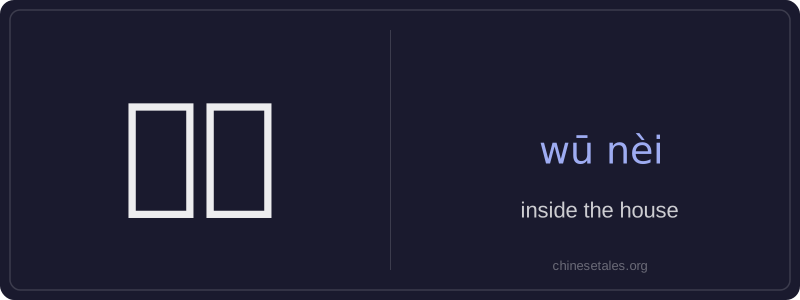
‘屋内’ literally means ‘inside the house’ — ‘屋’ (wū) means ‘house’ or ‘building’, and ‘内’ (nèi) means ‘inside’ or ‘within’. Together, they form a compound that functions as either a noun (e.g., ‘the interior of the house’) or an adverb (e.g., ‘inside the house’, indicating location). It is more formal and literary than the colloquial alternative ‘屋里’ (wū lǐ), and appears frequently in written Chinese, official notices, descriptions, and instructions.
This term emphasizes spatial containment and is often used to contrast with outdoor or external spaces. It commonly appears in contexts like safety guidelines (‘屋内禁止吸烟’), real estate descriptions (‘屋内装修简洁大方’), or weather-related advisories (‘台风来临时请留在屋内’). Unlike ‘家里’ (jiā lǐ), which carries emotional or familial connotations (‘at home’), ‘屋内’ is neutral and purely locative — it refers strictly to physical space, not relationship or belonging.
Example Sentences
Related Words
国语
‘Guó yǔ’ literally means 'national language'—
无论谁
‘无论谁’ (wú lùn shéi) is a pronoun meaning
外语
‘外语’ literally means ‘outside language’ —
面条
‘面条’ (miàn tiáo) literally means ‘flour str
不对
不对 (bù duì) literally combines 不 (bù), meani
认为
‘认为’ (rèn wéi) is a transitive verb meaning
认同
‘认同’ (tóng rèn) is a verb meaning ‘to ident
中学
'Zhōngxué' literally combines 'zhōng' (middle)