Word Explanation
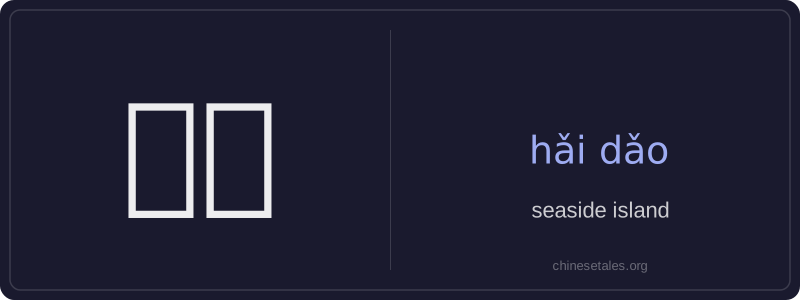
‘海岛’ literally means ‘sea island’—a small landmass completely surrounded by seawater, typically located near a mainland coast or in an open ocean. The character 海 (hǎi) means ‘sea’ or ‘ocean’, and 岛 (dǎo) means ‘island’. Together, they emphasize the island’s maritime setting and often imply relative isolation, natural scenery, and limited infrastructure. Unlike the more general term 岛 (dǎo), 海岛 specifically excludes inland islands (e.g., in lakes or rivers) and highlights proximity to or dependence on the sea.
This word is commonly used in geographical descriptions, travel writing, environmental discussions, and news about coastal development or conservation. It appears frequently in contexts involving tourism, marine ecology, fishing communities, or military strategy. While not inherently poetic, 海岛 often evokes imagery of beaches, coral reefs, seabirds, and remote tranquility—and may carry subtle connotations of remoteness or strategic significance depending on context.
Example Sentences
Related Words
国语
‘Guó yǔ’ literally means 'national language'—
无论谁
‘无论谁’ (wú lùn shéi) is a pronoun meaning
外语
‘外语’ literally means ‘outside language’ —
面条
‘面条’ (miàn tiáo) literally means ‘flour str
不对
不对 (bù duì) literally combines 不 (bù), meani
认为
‘认为’ (rèn wéi) is a transitive verb meaning
认同
‘认同’ (tóng rèn) is a verb meaning ‘to ident
中学
'Zhōngxué' literally combines 'zhōng' (middle)