Word Explanation
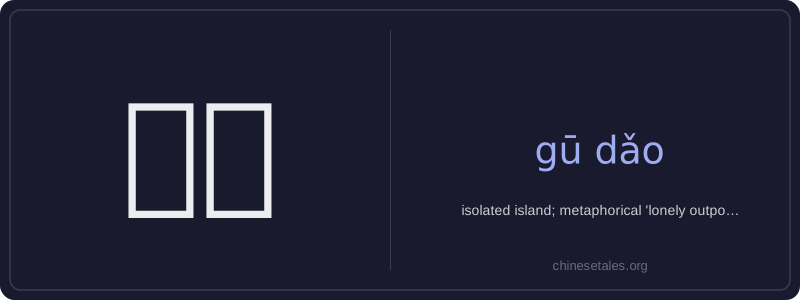
孤岛 literally means 'lonely island'—'孤' (gū) conveys isolation, solitude, or being cut off, while '岛' (dǎo) means 'island'. Together, they describe a physical island separated from the mainland or other landmasses by water. Geographically, it refers to islands with no direct land connection and often limited resources or accessibility.
Figuratively, 孤岛 is widely used as a metaphor for any isolated, self-contained, or neglected entity—such as a remote research station, a small community with little outside contact, or even a person feeling emotionally disconnected in a crowd. It carries a subtle connotation of vulnerability or resilience, depending on context, and appears frequently in literature, news reports about remote regions, and discussions of digital or social isolation.
Example Sentences
Related Words
国语
‘Guó yǔ’ literally means 'national language'—
无论谁
‘无论谁’ (wú lùn shéi) is a pronoun meaning
外语
‘外语’ literally means ‘outside language’ —
面条
‘面条’ (miàn tiáo) literally means ‘flour str
不对
不对 (bù duì) literally combines 不 (bù), meani
认为
‘认为’ (rèn wéi) is a transitive verb meaning
认同
‘认同’ (tóng rèn) is a verb meaning ‘to ident
中学
'Zhōngxué' literally combines 'zhōng' (middle)