Word Explanation
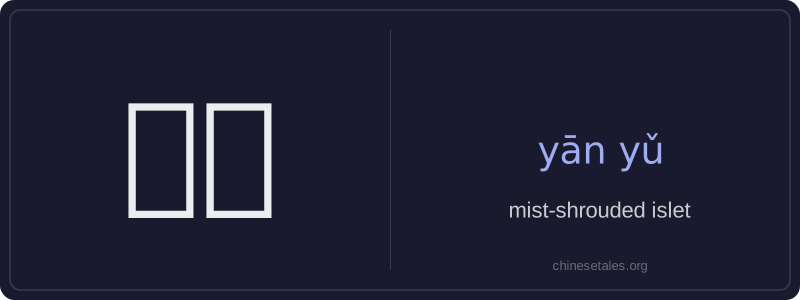
‘烟屿’ (yān yǔ) is a poetic, literary noun meaning 'mist-shrouded islet'—a small island partially or softly veiled by mist or light fog. The first character 烟 (yān) literally means 'smoke' but in classical and poetic usage often evokes hazy, ethereal vapour; the second character 屿 (yǔ) means 'islet' or 'small island', typically one rising from water. Together, they form a compact, image-rich compound common in Chinese poetry, travel writing, and landscape painting descriptions.
This term conveys quiet beauty, seclusion, and atmospheric subtlety—not literal pollution or heavy smoke. It appears most frequently in descriptive passages about rivers, lakes, or coastal scenery, especially in southern China where misty waterways are common. While grammatically a noun, it functions as a fixed literary collocation and is rarely broken apart or modified with adjectives. It’s not used in casual speech or modern technical contexts, but rather in artistic, literary, or scenic naming (e.g., park features or poem titles).
Example Sentences
Related Words
国语
‘Guó yǔ’ literally means 'national language'—
无论谁
‘无论谁’ (wú lùn shéi) is a pronoun meaning
外语
‘外语’ literally means ‘outside language’ —
面条
‘面条’ (miàn tiáo) literally means ‘flour str
不对
不对 (bù duì) literally combines 不 (bù), meani
认为
‘认为’ (rèn wéi) is a transitive verb meaning
认同
‘认同’ (tóng rèn) is a verb meaning ‘to ident
中学
'Zhōngxué' literally combines 'zhōng' (middle)