Word Explanation
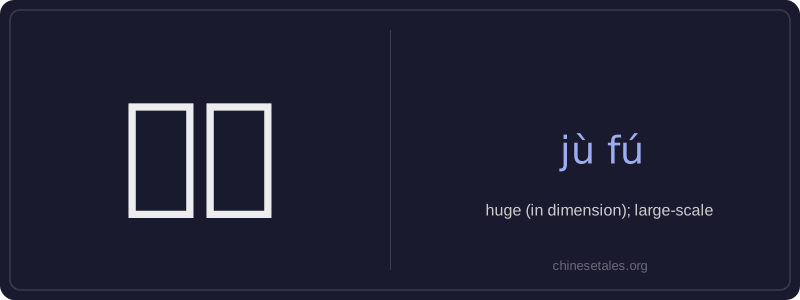
巨幅 literally combines 巨 (jù), meaning 'gigantic' or 'enormous', and 幅 (fú), a measure word traditionally used for paintings, banners, and other flat, rectangular objects like scrolls or posters. Together, 巨幅 functions as an adjective meaning 'huge in size' or 'large-scale', especially emphasizing great width or area. It is commonly used to describe large-format visual media — such as murals, billboards, photographs, or tapestries — where physical scale is visually striking and functionally significant.
While 幅 itself is a classifier, 巨幅 is not a noun but an attributive adjective that must modify a noun (e.g., 巨幅油画, 巨幅海报). It carries a formal, descriptive tone and appears frequently in art criticism, urban planning, journalism, and advertising contexts. Unlike colloquial terms like 很大 or 超大, 巨幅 conveys a sense of grandeur, intentionality, and often public visibility — it’s rarely used for everyday objects like furniture or clothing unless emphasizing exceptional scale.
Example Sentences
Related Words
国语
‘Guó yǔ’ literally means 'national language'—
无论谁
‘无论谁’ (wú lùn shéi) is a pronoun meaning
外语
‘外语’ literally means ‘outside language’ —
面条
‘面条’ (miàn tiáo) literally means ‘flour str
不对
不对 (bù duì) literally combines 不 (bù), meani
认为
‘认为’ (rèn wéi) is a transitive verb meaning
认同
‘认同’ (tóng rèn) is a verb meaning ‘to ident
中学
'Zhōngxué' literally combines 'zhōng' (middle)