Word Explanation
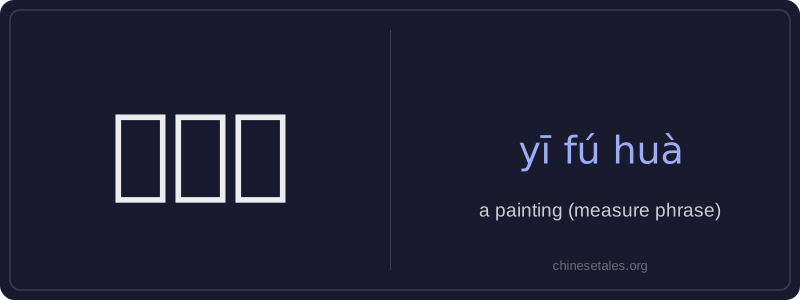
'Yī fú huà' literally means 'one measure-unit painting' and functions as a noun phrase meaning 'a painting'. The character '一' (yī) is the numeral 'one', '幅' (fú) is a measure word used specifically for flat, rectangular artworks like paintings, calligraphy scrolls, or posters — it cannot be replaced by generic measure words like '个' (gè). '画' (huà) means 'painting' or 'picture'. Together, this phrase emphasizes the artwork as a complete, framed visual piece, commonly used when describing, buying, appreciating, or gifting fine art.
This phrase appears frequently in galleries, art classes, home decoration contexts, and museum descriptions. Unlike '一张画' (yī zhāng huà), which is more casual and can refer to any drawn image (even a child's sketch), '一幅画' carries a slightly more formal or artistic connotation, often implying intentionality, composition, and aesthetic value. It’s also used metaphorically — for example, '这幅画展现了春天的生机' ('This painting depicts the vitality of spring').
Example Sentences
Related Words
国语
‘Guó yǔ’ literally means 'national language'—
无论谁
‘无论谁’ (wú lùn shéi) is a pronoun meaning
外语
‘外语’ literally means ‘outside language’ —
面条
‘面条’ (miàn tiáo) literally means ‘flour str
不对
不对 (bù duì) literally combines 不 (bù), meani
认为
‘认为’ (rèn wéi) is a transitive verb meaning
认同
‘认同’ (tóng rèn) is a verb meaning ‘to ident
中学
'Zhōngxué' literally combines 'zhōng' (middle)