Word Explanation
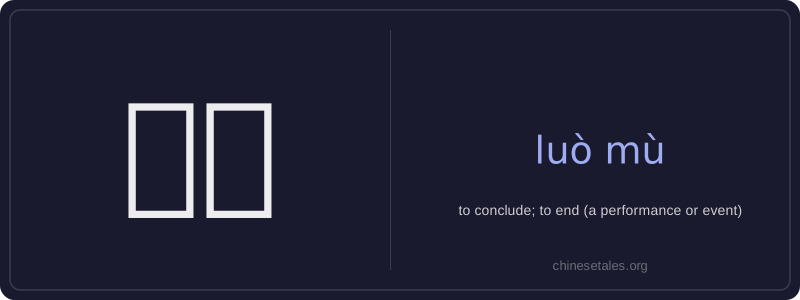
‘落幕’ literally means ‘the curtain falls’—a theatrical image borrowed to describe the formal conclusion of an event, performance, ceremony, or period. The character 落 (luò) means ‘to fall’ or ‘to descend’, while 幕 (mù) means ‘curtain’, especially the stage curtain that closes a show. Together, they evoke the visual and symbolic moment when a performance ends and the audience knows it’s over.
This term is used figuratively for any significant, planned ending—such as festivals, conferences, sports tournaments, or even historical eras. It carries a sense of closure, finality, and often a touch of solemnity or reflection. While neutral in tone, it’s more common in written or formal spoken Chinese than in casual daily speech. You’ll see it frequently in news headlines, official reports, and cultural commentary.
Example Sentences
Related Words
国语
‘Guó yǔ’ literally means 'national language'—
无论谁
‘无论谁’ (wú lùn shéi) is a pronoun meaning
外语
‘外语’ literally means ‘outside language’ —
面条
‘面条’ (miàn tiáo) literally means ‘flour str
不对
不对 (bù duì) literally combines 不 (bù), meani
认为
‘认为’ (rèn wéi) is a transitive verb meaning
认同
‘认同’ (tóng rèn) is a verb meaning ‘to ident
中学
'Zhōngxué' literally combines 'zhōng' (middle)