Word Explanation
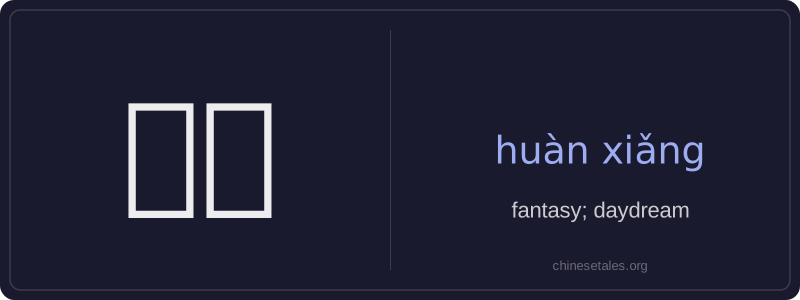
‘幻想’ (huàn xiǎng) is a noun meaning ‘fantasy’ or ‘daydream’—a mental image or story that is imagined but not based on reality. The first character 幻 (huàn) means ‘illusion’ or ‘unreal’, suggesting something elusive or deceptive, while the second character 想 (xiǎng) means ‘to think’ or ‘to imagine’. Together, they convey the idea of imaginative thinking detached from practical constraints—often pleasant, sometimes escapist, and occasionally impractical.
This word is commonly used in both literary and everyday contexts: to describe creative inspiration (e.g., a writer’s fantasy world), nostalgic or romantic daydreaming, or unrealistic expectations (e.g., ‘don’t live in fantasy’). It carries a neutral-to-slightly-negative connotation when implying detachment from reality, but can be positive when referring to artistic imagination or childhood wonder. Unlike the verb ‘想象’ (xiǎng xiàng, ‘to imagine’), ‘幻想’ is almost always nominal and emphasizes the *content* of the imagination rather than the act itself.
Example Sentences
Related Words
国语
‘Guó yǔ’ literally means 'national language'—
无论谁
‘无论谁’ (wú lùn shéi) is a pronoun meaning
外语
‘外语’ literally means ‘outside language’ —
面条
‘面条’ (miàn tiáo) literally means ‘flour str
不对
不对 (bù duì) literally combines 不 (bù), meani
认为
‘认为’ (rèn wéi) is a transitive verb meaning
认同
‘认同’ (tóng rèn) is a verb meaning ‘to ident
中学
'Zhōngxué' literally combines 'zhōng' (middle)