Word Explanation
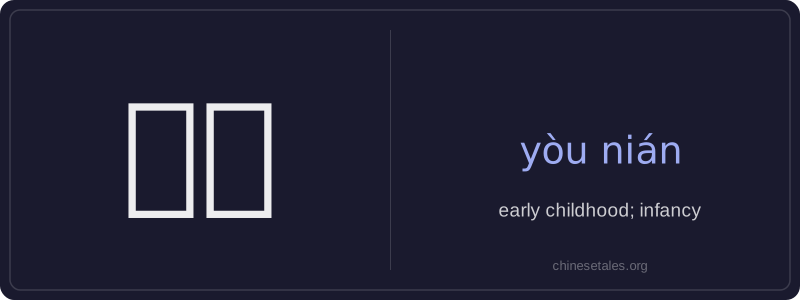
幼年 (yòu nián) literally combines 幼 (yòu), meaning 'young', 'juvenile', or 'immature', and 年 (nián), meaning 'year' or 'age'. Together, they form a noun referring to the earliest stage of life—typically from infancy through early childhood, before formal schooling begins. It emphasizes biological and developmental youthfulness, not just chronological age.
This term is commonly used in formal, literary, or scientific contexts—especially when describing the life stages of humans or animals. In zoology and veterinary science, 幼年 frequently appears in discussions of growth phases, behavioral development, or care requirements. While it can apply to people, it sounds more objective and detached than colloquial alternatives like 小时候 (xiǎo shíhou). It’s rarely used in casual speech about one’s own childhood but appears often in biographies, research papers, or animal documentaries.
Example Sentences
Related Words
国语
‘Guó yǔ’ literally means 'national language'—
无论谁
‘无论谁’ (wú lùn shéi) is a pronoun meaning
外语
‘外语’ literally means ‘outside language’ —
面条
‘面条’ (miàn tiáo) literally means ‘flour str
不对
不对 (bù duì) literally combines 不 (bù), meani
认为
‘认为’ (rèn wéi) is a transitive verb meaning
认同
‘认同’ (tóng rèn) is a verb meaning ‘to ident
中学
'Zhōngxué' literally combines 'zhōng' (middle)