Word Explanation
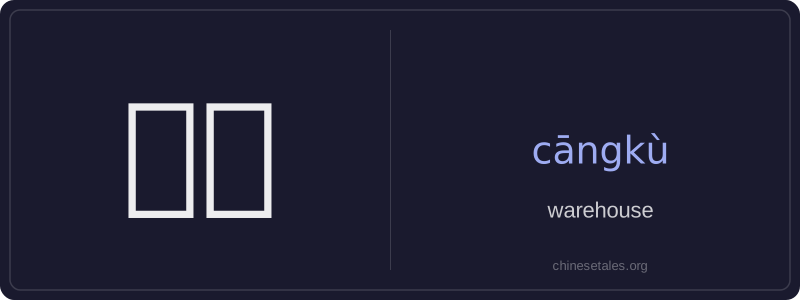
仓库 (cāngkù) is a compound noun meaning 'warehouse' — a large building or space used for storing goods, raw materials, or inventory before they are distributed, sold, or used. The character 仓 (cāng) originally meant 'granary' or 'storage place', often associated with grain storage in ancient China; it conveys the idea of safekeeping and containment. The character 库 (kù) means 'storehouse' or 'repository', emphasizing the function of organized storage, especially for valuable or bulk items. Together, 仓库 reinforces the concept of a dedicated, functional storage facility — more formal and institutional than casual terms like 储藏室 (chǔcángshì, 'storage room').
This word is commonly used in logistics, retail, manufacturing, and e-commerce contexts. It appears in official documents, business reports, and signage (e.g., '仓库入口' — 'Warehouse Entrance'). While it can refer to any large-scale storage space, it typically implies industrial or commercial use rather than personal storage. In spoken Chinese, it’s neutral in register — appropriate in both professional and everyday settings when discussing supply chains or physical infrastructure.
Example Sentences
Related Words
国语
‘Guó yǔ’ literally means 'national language'—
无论谁
‘无论谁’ (wú lùn shéi) is a pronoun meaning
外语
‘外语’ literally means ‘outside language’ —
面条
‘面条’ (miàn tiáo) literally means ‘flour str
不对
不对 (bù duì) literally combines 不 (bù), meani
认为
‘认为’ (rèn wéi) is a transitive verb meaning
认同
‘认同’ (tóng rèn) is a verb meaning ‘to ident
中学
'Zhōngxué' literally combines 'zhōng' (middle)