Word Explanation
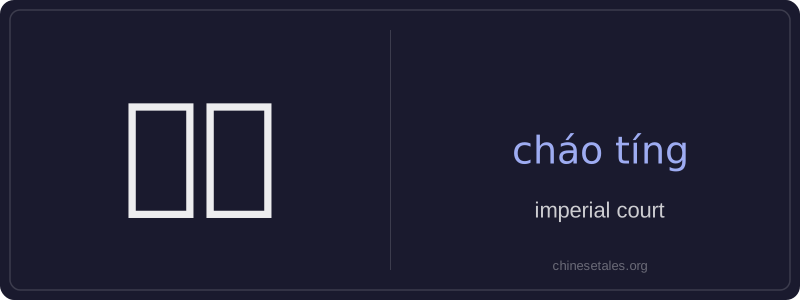
‘朝廷’ (cháo tíng) literally combines ‘朝’ (cháo), meaning ‘dynasty’ or ‘imperial court’, and ‘廷’ (tíng), meaning ‘court’ or ‘hall’. Together, they refer specifically to the imperial court—the central administrative and political institution of pre-modern Chinese dynasties, where the emperor, high-ranking officials, ministers, and scholars convened to govern the empire. It conveys authority, hierarchy, and historical legitimacy.
This term is almost exclusively used in historical, literary, or formal contexts—not in modern everyday speech. You’ll encounter it in classical texts, historical novels, documentaries, or academic discussions about imperial China. It evokes grandeur and tradition, often contrasting with regional or local governance. While ‘朝’ alone can mean ‘dynasty’ or ‘to face’, and ‘廷’ appears in words like ‘法院’ (fǎtíng, ‘court of law’), their combination ‘朝廷’ is fixed and carries strong historical weight, never used for contemporary government bodies like ‘the State Council’.
Example Sentences
Related Words
国语
‘Guó yǔ’ literally means 'national language'—
无论谁
‘无论谁’ (wú lùn shéi) is a pronoun meaning
外语
‘外语’ literally means ‘outside language’ —
面条
‘面条’ (miàn tiáo) literally means ‘flour str
不对
不对 (bù duì) literally combines 不 (bù), meani
认为
‘认为’ (rèn wéi) is a transitive verb meaning
认同
‘认同’ (tóng rèn) is a verb meaning ‘to ident
中学
'Zhōngxué' literally combines 'zhōng' (middle)