Word Explanation
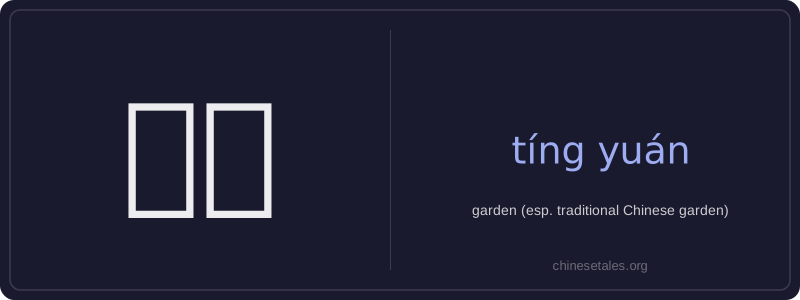
庭园 (tíng yuán) refers specifically to a traditional Chinese garden—often found in classical residences, temples, or imperial compounds. The character 庭 (tíng) means 'courtyard' or 'yard', evoking an enclosed, intimate outdoor space, while 园 (yuán) means 'garden' or 'park', emphasizing cultivated nature. Together, they convey a harmonious, human-scaled landscape designed for contemplation, poetry, and quiet leisure—featuring rockeries, ponds, pavilions, winding paths, and carefully pruned plants.
This term carries cultural weight: it’s not just any garden, but one rooted in Daoist and Confucian aesthetics—valuing balance, subtlety, and the interplay of void and form. 庭园 is commonly used in literary, historical, or architectural contexts, and appears in names of famous gardens like the Humble Administrator’s Garden (拙政园, Zhuōzhèng Yuán). It’s more formal and poetic than the general word 花园 (huāyuán, 'flower garden') and rarely used for modern public parks or home backyards.
Example Sentences
Related Words
国语
‘Guó yǔ’ literally means 'national language'—
无论谁
‘无论谁’ (wú lùn shéi) is a pronoun meaning
外语
‘外语’ literally means ‘outside language’ —
面条
‘面条’ (miàn tiáo) literally means ‘flour str
不对
不对 (bù duì) literally combines 不 (bù), meani
认为
‘认为’ (rèn wéi) is a transitive verb meaning
认同
‘认同’ (tóng rèn) is a verb meaning ‘to ident
中学
'Zhōngxué' literally combines 'zhōng' (middle)