Word Explanation
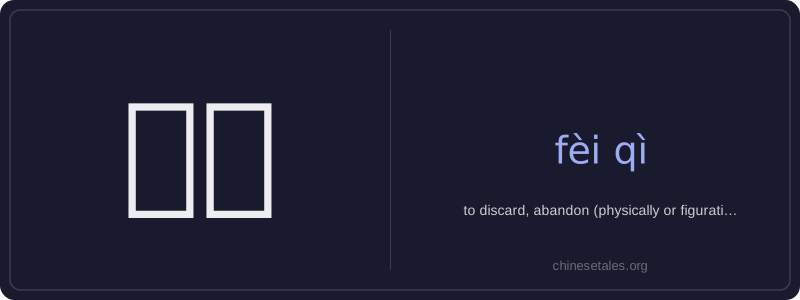
废弃 (fèi qì) is a compound verb meaning 'to discard,' 'to abandon,' or 'to leave unused.' The first character 废 (fèi) means 'useless,' 'worn out,' or 'abolished,' while 弃 (qì) means 'to discard' or 'to forsake.' Together, they emphasize deliberate rejection — whether of physical objects (like old buildings or broken tools), infrastructure (such as outdated factories), or even abstract concepts (like outdated policies). It carries a formal, slightly literary tone and often implies permanence and finality.
This word is commonly used in environmental, urban planning, and policy contexts — for example, describing abandoned factories, decommissioned nuclear sites, or obsolete regulations. Unlike more casual terms like 扔掉 (rēng diào, 'to throw away'), 废弃 suggests systemic or institutional action, not just personal disposal. It frequently appears in news reports, government documents, and academic writing about sustainability, land use, or historical preservation.
Example Sentences
Related Words
国语
‘Guó yǔ’ literally means 'national language'—
无论谁
‘无论谁’ (wú lùn shéi) is a pronoun meaning
外语
‘外语’ literally means ‘outside language’ —
面条
‘面条’ (miàn tiáo) literally means ‘flour str
不对
不对 (bù duì) literally combines 不 (bù), meani
认为
‘认为’ (rèn wéi) is a transitive verb meaning
认同
‘认同’ (tóng rèn) is a verb meaning ‘to ident
中学
'Zhōngxué' literally combines 'zhōng' (middle)