Word Explanation
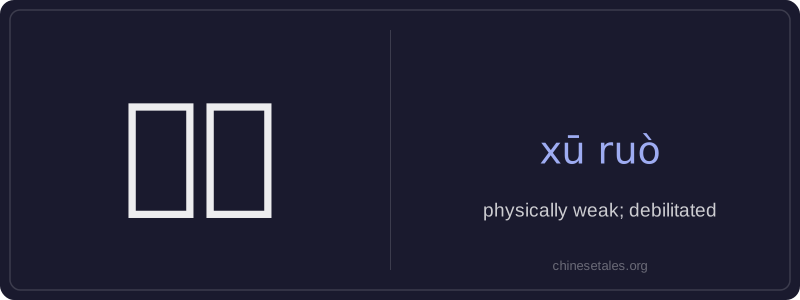
虚弱 (xū ruò) is an adjective meaning 'physically weak' or 'debilitated', often describing a temporary or pathological lack of physical strength and stamina. The first character 虚 (xū) means 'empty', 'deficient', or 'insubstantial', while 弱 (ruò) means 'weak' or 'feeble'. Together, they convey a state of constitutional deficiency — not just tiredness, but a deeper depletion of vital energy (qì), commonly used in Traditional Chinese Medicine contexts as well as everyday speech.
This word emphasizes a medical or health-related weakness — such as after illness, surgery, malnutrition, or chronic fatigue — rather than momentary exhaustion. It’s typically used predicatively (e.g., 他很虚弱) or attributively before nouns like 状态 (state), 身体 (body), or 体质 (constitution). It carries a neutral-to-somber tone and implies concern or need for care.
Example Sentences
Related Words
国语
‘Guó yǔ’ literally means 'national language'—
无论谁
‘无论谁’ (wú lùn shéi) is a pronoun meaning
外语
‘外语’ literally means ‘outside language’ —
面条
‘面条’ (miàn tiáo) literally means ‘flour str
不对
不对 (bù duì) literally combines 不 (bù), meani
认为
‘认为’ (rèn wéi) is a transitive verb meaning
认同
‘认同’ (tóng rèn) is a verb meaning ‘to ident
中学
'Zhōngxué' literally combines 'zhōng' (middle)