Word Explanation
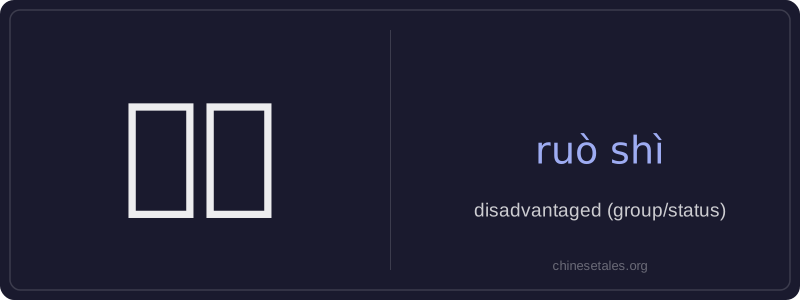
‘弱势’ literally combines ‘弱’ (weak, feeble) and ‘势’ (power, influence, or position), forming a noun meaning ‘disadvantaged group’ or ‘those in a weaker social, economic, or physical position.’ It does not describe individual weakness but rather systemic vulnerability — often used in policy, education, healthcare, and social welfare contexts to refer to people who face barriers due to age, disability, income, gender, ethnicity, or health status.
The term carries a respectful, empathetic register and is commonly paired with words like ‘群体’ (group), ‘地位’ (status), or ‘保护’ (protection). Unlike adjectives such as ‘弱小’ (small and weak) or ‘脆弱’ (fragile), ‘弱势’ emphasizes structural inequality rather than inherent personal limitation. It frequently appears in formal discourse, news reports, and official documents advocating equity and inclusion.
Example Sentences
Related Words
国语
‘Guó yǔ’ literally means 'national language'—
无论谁
‘无论谁’ (wú lùn shéi) is a pronoun meaning
外语
‘外语’ literally means ‘outside language’ —
面条
‘面条’ (miàn tiáo) literally means ‘flour str
不对
不对 (bù duì) literally combines 不 (bù), meani
认为
‘认为’ (rèn wéi) is a transitive verb meaning
认同
‘认同’ (tóng rèn) is a verb meaning ‘to ident
中学
'Zhōngxué' literally combines 'zhōng' (middle)