Word Explanation
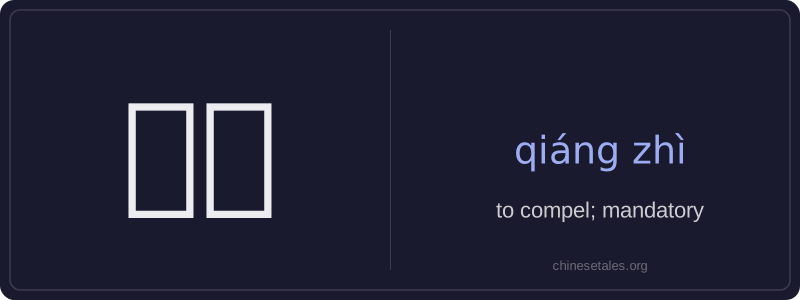
强制 means 'to compel' or 'mandatory' and functions both as an adjective (e.g., 强制措施, 'mandatory measures') and a verb (e.g., 强制执行, 'to enforce compulsorily'). The first character 强 (qiáng) means 'strong' or 'forceful', while 制 (zhì) means 'to control', 'to regulate', or 'to restrain'. Together, they convey the idea of using authoritative power to impose compliance—often by law, regulation, or institutional authority. It carries a formal, sometimes negative connotation, implying lack of voluntary choice.
This term appears frequently in legal, administrative, medical, and educational contexts—for instance, mandatory vaccination policies, court-ordered actions, or compulsory education laws. It is rarely used in casual speech and almost never with people in personal relationships (e.g., you wouldn’t say '我强制你吃饭'; use 劝 or 要求 instead). Its tone is objective and official, reflecting top-down enforcement rather than persuasion.
Example Sentences
Related Words
国语
‘Guó yǔ’ literally means 'national language'—
无论谁
‘无论谁’ (wú lùn shéi) is a pronoun meaning
外语
‘外语’ literally means ‘outside language’ —
面条
‘面条’ (miàn tiáo) literally means ‘flour str
不对
不对 (bù duì) literally combines 不 (bù), meani
认为
‘认为’ (rèn wéi) is a transitive verb meaning
认同
‘认同’ (tóng rèn) is a verb meaning ‘to ident
中学
'Zhōngxué' literally combines 'zhōng' (middle)