Word Explanation
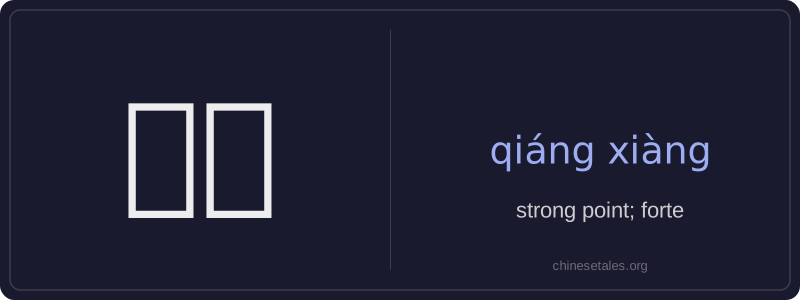
‘强项’ literally means ‘strong item’ — ‘强’ (qiáng) means ‘strong’ or ‘powerful’, and ‘项’ (xiàng) means ‘item’, ‘aspect’, or ‘field’. Together, they form a noun meaning one’s strongest skill, area of expertise, or greatest advantage — essentially, one’s ‘forte’ or ‘strong point’. It is commonly used in academic, professional, or personal development contexts to highlight where someone excels compared to others or relative to their own weaker areas.
The term carries a neutral-to-positive connotation and is frequently heard in school reports, job interviews, performance reviews, and self-introductions. Unlike more formal terms like ‘专长’ (zhuāncháng), ‘强项’ feels conversational yet precise, often appearing in contrast with ‘弱项’ (ruòxiàng, ‘weak point’). It’s typically used predicatively (e.g., ‘他的强项是写作’) or as a subject/object in sentences describing ability or performance.
Example Sentences
Related Words
国语
‘Guó yǔ’ literally means 'national language'—
无论谁
‘无论谁’ (wú lùn shéi) is a pronoun meaning
外语
‘外语’ literally means ‘outside language’ —
面条
‘面条’ (miàn tiáo) literally means ‘flour str
不对
不对 (bù duì) literally combines 不 (bù), meani
认为
‘认为’ (rèn wéi) is a transitive verb meaning
认同
‘认同’ (tóng rèn) is a verb meaning ‘to ident
中学
'Zhōngxué' literally combines 'zhōng' (middle)