Word Explanation
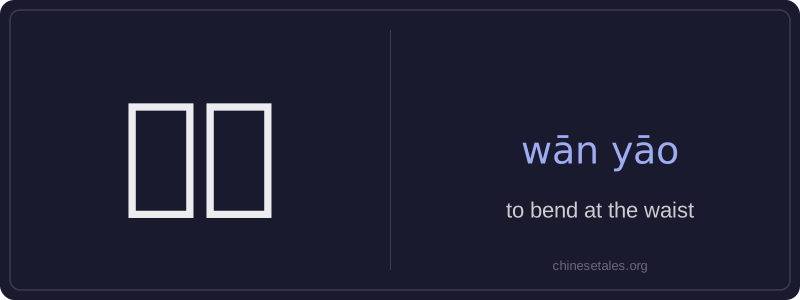
‘弯腰’ literally combines ‘弯’ (to bend, curve) and ‘腰’ (waist), forming a compound verb meaning ‘to bend at the waist’ — that is, to flex the torso forward from the hips while keeping the back relatively straight or slightly curved. It describes a common physical movement used in everyday activities like picking something up from the floor, tying shoelaces, gardening, or showing respect in formal or traditional contexts.
The verb is neutral in register and widely used across spoken and written Chinese. It can appear as a standalone verb (e.g., 他弯腰捡起了笔) or in serial verb constructions (e.g., 弯腰看地图). Unlike some posture verbs, ‘弯腰’ emphasizes intentional, controlled bending — not slouching or collapsing — and often implies purpose, humility, or physical effort.
Example Sentences
Related Words
国语
‘Guó yǔ’ literally means 'national language'—
无论谁
‘无论谁’ (wú lùn shéi) is a pronoun meaning
外语
‘外语’ literally means ‘outside language’ —
面条
‘面条’ (miàn tiáo) literally means ‘flour str
不对
不对 (bù duì) literally combines 不 (bù), meani
认为
‘认为’ (rèn wéi) is a transitive verb meaning
认同
‘认同’ (tóng rèn) is a verb meaning ‘to ident
中学
'Zhōngxué' literally combines 'zhōng' (middle)