Word Explanation
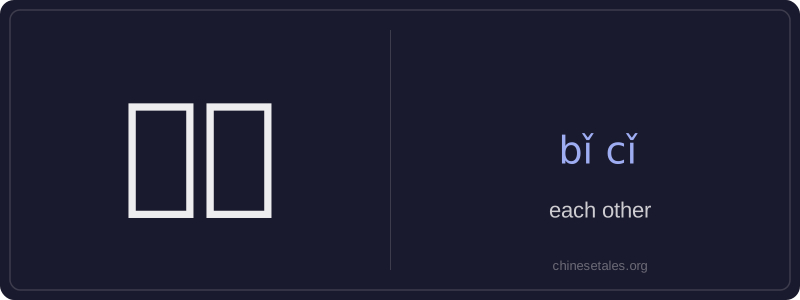
彼此 (bǐ cǐ) is a reciprocal pronoun meaning 'each other' — it expresses mutual action or relationship between two or more people or things. The character 彼 means 'that one' or 'the other', while 此 means 'this one' or 'the one here'; together, they form a balanced, symmetric expression indicating reciprocity without specifying direction. It functions as a noun or pronoun and often appears as the object of a verb (e.g., 帮助彼此, 理解彼此) or after prepositions like 和 or 跟.
This word is common in spoken and written Mandarin, especially in contexts involving cooperation, emotion, or social interaction — such as friendships, teamwork, or family life. It carries a neutral-to-warm register and sounds slightly more formal or literary than the colloquial alternative 互相 (hù xiāng), though both are widely accepted. Unlike English 'each other', 彼此 cannot be pluralized or modified by adjectives; it always stands alone as an unmarked reciprocal term.
Example Sentences
Related Words
国语
‘Guó yǔ’ literally means 'national language'—
无论谁
‘无论谁’ (wú lùn shéi) is a pronoun meaning
外语
‘外语’ literally means ‘outside language’ —
面条
‘面条’ (miàn tiáo) literally means ‘flour str
不对
不对 (bù duì) literally combines 不 (bù), meani
认为
‘认为’ (rèn wéi) is a transitive verb meaning
认同
‘认同’ (tóng rèn) is a verb meaning ‘to ident
中学
'Zhōngxué' literally combines 'zhōng' (middle)