Word Explanation
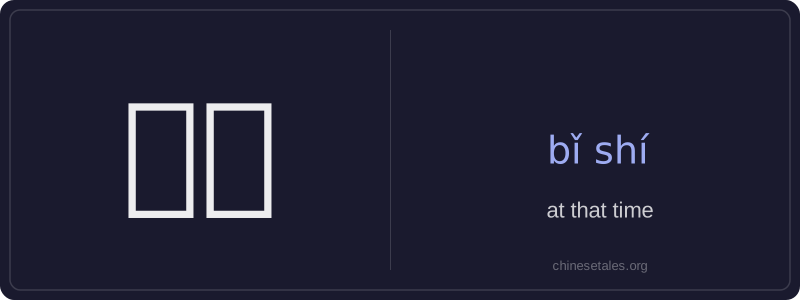
彼时 (bǐ shí) is a literary and formal adverb meaning 'at that time' or 'then', referring to a specific point or period in the past already mentioned or clearly implied in context. The character 彼 (bǐ) means 'that' — a distal demonstrative pronoun indicating something remote in space or time — while 时 (shí) means 'time' or 'moment'. Together, they form a compact, elegant expression used primarily in written Chinese, historical narratives, essays, or formal speech to evoke a sense of temporal distance and reflection.
This term carries a classical tone and is rarely used in casual conversation. It often appears in recounting past events, describing historical scenes, or contrasting past and present situations. Because it’s inherently deictic (pointing to a previously established time), 彼时 almost always depends on prior contextual anchoring — it doesn’t stand alone as a time phrase like 昨天 or 那时候. Its conciseness and stylistic weight make it especially common in literature, journalism, and academic writing.
Example Sentences
Related Words
国语
‘Guó yǔ’ literally means 'national language'—
无论谁
‘无论谁’ (wú lùn shéi) is a pronoun meaning
外语
‘外语’ literally means ‘outside language’ —
面条
‘面条’ (miàn tiáo) literally means ‘flour str
不对
不对 (bù duì) literally combines 不 (bù), meani
认为
‘认为’ (rèn wéi) is a transitive verb meaning
认同
‘认同’ (tóng rèn) is a verb meaning ‘to ident
中学
'Zhōngxué' literally combines 'zhōng' (middle)