Word Explanation
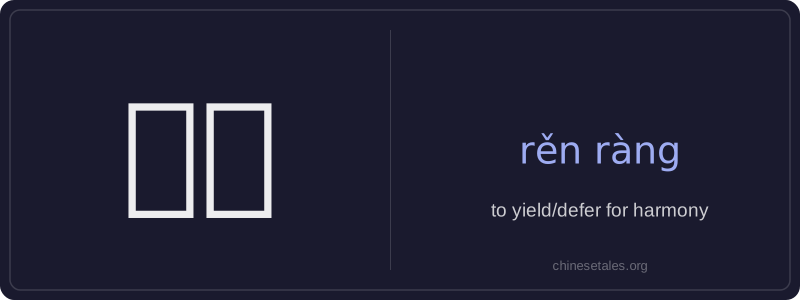
忍让 (rěn ràng) is a compound verb meaning 'to yield' or 'to defer'—not out of weakness, but as a conscious, often emotionally mature choice to preserve harmony, avoid conflict, or show compassion. The first character 忍 (rěn) means 'to endure' or 'to restrain oneself', carrying connotations of patience and self-control; the second character 让 (ràng) means 'to yield', 'to give way', or 'to let someone else go first'. Together, they express a proactive, morally weighted act of restraint—choosing peace over winning an argument, or prioritizing relationship health over personal pride.
This word appears frequently in discussions about family dynamics, workplace cooperation, marital advice, and traditional Confucian ideals of humility and social responsibility. It’s often used with subjects like parents, spouses, elders, or colleagues, and commonly modified by adverbs like 主动 (actively), 默默地 (silently), or 为了… (for the sake of…). While culturally valued, excessive 忍让 can sometimes imply unhealthy self-sacrifice—context determines whether it’s admirable or unbalanced.
Example Sentences
Related Words
国语
‘Guó yǔ’ literally means 'national language'—
无论谁
‘无论谁’ (wú lùn shéi) is a pronoun meaning
外语
‘外语’ literally means ‘outside language’ —
面条
‘面条’ (miàn tiáo) literally means ‘flour str
不对
不对 (bù duì) literally combines 不 (bù), meani
认为
‘认为’ (rèn wéi) is a transitive verb meaning
认同
‘认同’ (tóng rèn) is a verb meaning ‘to ident
中学
'Zhōngxué' literally combines 'zhōng' (middle)