Word Explanation
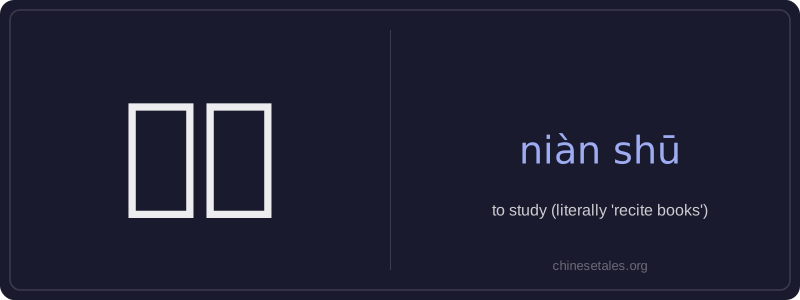
‘念书’ literally means 'to recite books' — '念' (niàn) means 'to read aloud or recite', and '书' (shū) means 'book'. Historically, learning in traditional Chinese education involved vocal repetition of classical texts, so the phrase evolved to mean 'to study' or 'to be a student', especially in formal or school-based contexts. It emphasizes the act of studying as an ongoing activity, often implying enrollment in school or structured learning.
While '念书' is still widely used in everyday speech, it carries a slightly more traditional or colloquial tone than formal terms like '学习' (xuéxí). It’s commonly heard in family conversations ('你今天念书了吗?'), autobiographical contexts ('我小时候在村里念书'), or when referring to someone’s educational background. It’s rarely used for self-directed, non-academic learning — for that, '学习' or '自学' are preferred.
Example Sentences
Related Words
国语
‘Guó yǔ’ literally means 'national language'—
无论谁
‘无论谁’ (wú lùn shéi) is a pronoun meaning
外语
‘外语’ literally means ‘outside language’ —
面条
‘面条’ (miàn tiáo) literally means ‘flour str
不对
不对 (bù duì) literally combines 不 (bù), meani
认为
‘认为’ (rèn wéi) is a transitive verb meaning
认同
‘认同’ (tóng rèn) is a verb meaning ‘to ident
中学
'Zhōngxué' literally combines 'zhōng' (middle)