Word Explanation
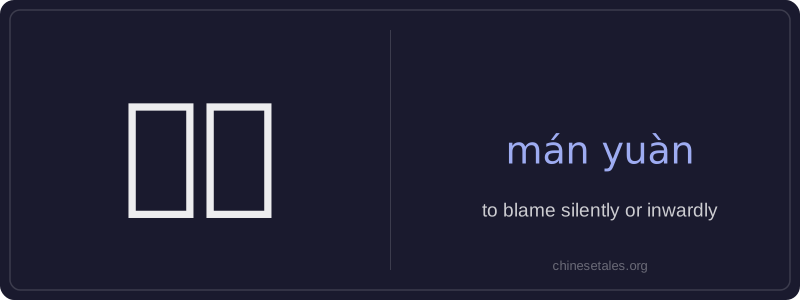
埋怨 means 'to blame silently or inwardly' — not openly confronting someone, but feeling and expressing resentment internally or in subdued ways. The character 埋 (mán) here is a special reading (not the common mái), meaning 'to conceal' or 'to suppress', while 怨 (yuàn) means 'resentment' or 'grievance'. Together, they evoke the image of burying one’s grievance — holding it inside rather than voicing it directly. This word carries a sense of quiet disappointment, often tinged with helplessness or self-restraint.
It’s commonly used in interpersonal contexts: family disagreements, workplace frustrations, or unmet expectations where direct confrontation feels inappropriate. Unlike 责备 (to reprimand) or 批评 (to criticize), 埋怨 implies emotional suppression — the speaker may sigh, withdraw, or make passive comments instead of arguing. It frequently appears in spoken Mandarin and narrative writing to reveal inner emotional tension without overt conflict.
Example Sentences
Related Words
国语
‘Guó yǔ’ literally means 'national language'—
无论谁
‘无论谁’ (wú lùn shéi) is a pronoun meaning
外语
‘外语’ literally means ‘outside language’ —
面条
‘面条’ (miàn tiáo) literally means ‘flour str
不对
不对 (bù duì) literally combines 不 (bù), meani
认为
‘认为’ (rèn wéi) is a transitive verb meaning
认同
‘认同’ (tóng rèn) is a verb meaning ‘to ident
中学
'Zhōngxué' literally combines 'zhōng' (middle)