Word Explanation
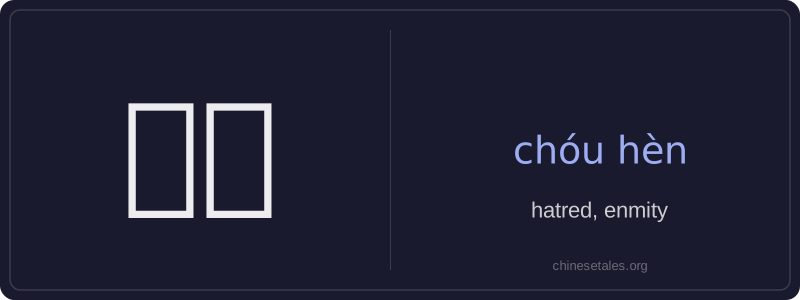
仇恨 (chóu hèn) is a formal, strong noun meaning 'hatred' or 'enmity' — an intense, enduring hostility often rooted in past harm, injustice, or deep grievance. While 仇 (chóu) alone means 'enemy' or 'grudge', and 恨 (hèn) means 'to hate' or 'resentment', together they form a compound that emphasizes mutual, entrenched animosity, not fleeting anger. It frequently appears in historical, political, or literary contexts — describing conflicts between groups, generations, or nations — rather than everyday interpersonal friction.
This word carries serious emotional weight and moral gravity; it implies a lasting, often justified, sense of injury and the desire for retribution or justice. Unlike milder terms like 生气 (shēngqì, 'anger') or 不满 (bùmǎn, 'dissatisfaction'), 仇恨 suggests a profound rupture in relationships or social order. It is rarely used in casual speech and almost never to describe minor annoyances — using it inappropriately can sound melodramatic or alarmingly extreme.
Example Sentences
Related Words
国语
‘Guó yǔ’ literally means 'national language'—
无论谁
‘无论谁’ (wú lùn shéi) is a pronoun meaning
外语
‘外语’ literally means ‘outside language’ —
面条
‘面条’ (miàn tiáo) literally means ‘flour str
不对
不对 (bù duì) literally combines 不 (bù), meani
认为
‘认为’ (rèn wéi) is a transitive verb meaning
认同
‘认同’ (tóng rèn) is a verb meaning ‘to ident
中学
'Zhōngxué' literally combines 'zhōng' (middle)