Word Explanation
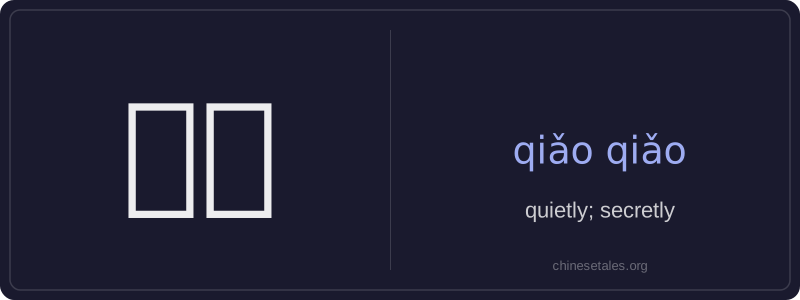
悄悄 is a reduplicated adverb meaning 'quietly' or 'secretly', emphasizing the manner of an action—done without drawing attention, noise, or notice. Though both characters are identical and pronounced qiǎo in this context, 悄 alone can mean 'quiet' or 'silent', and its repetition intensifies the sense of hushed, unobtrusive behavior. It often modifies verbs (e.g., 走、说、离开) and appears before them in sentence structure.
This word carries a gentle, sometimes tender or mischievous nuance—like tiptoeing past someone sleeping or whispering a surprise plan. Unlike more formal synonyms, 悄悄 feels natural in everyday speech and writing, especially in informal narratives, dialogue, or descriptive passages. It’s rarely used as a noun or adjective; its grammatical role is almost exclusively adverbial. Learners should note that it’s not used for literal silence only—it also conveys secrecy, discretion, or softness of action.
Example Sentences
Related Words
国语
‘Guó yǔ’ literally means 'national language'—
无论谁
‘无论谁’ (wú lùn shéi) is a pronoun meaning
外语
‘外语’ literally means ‘outside language’ —
面条
‘面条’ (miàn tiáo) literally means ‘flour str
不对
不对 (bù duì) literally combines 不 (bù), meani
认为
‘认为’ (rèn wéi) is a transitive verb meaning
认同
‘认同’ (tóng rèn) is a verb meaning ‘to ident
中学
'Zhōngxué' literally combines 'zhōng' (middle)