Word Explanation
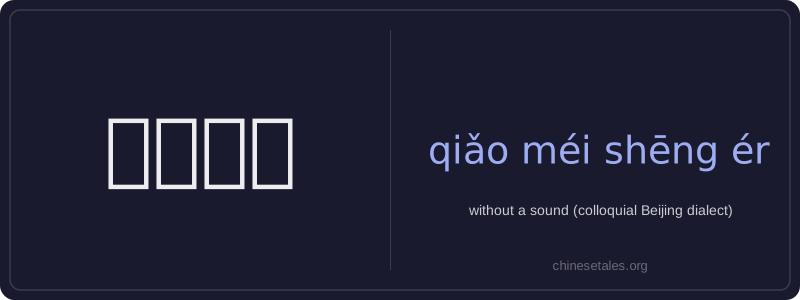
‘悄没声儿’ is a colloquial Beijing-dialect adverb meaning ‘without a sound’ or ‘silently, without anyone noticing.’ Though it looks like a noun phrase (with characters meaning ‘quiet,’ ‘not,’ ‘sound,’ and the Beijing dialect diminutive ‘-er’), it functions exclusively as an adverb modifying verbs—describing *how* an action occurs. The word vividly evokes stealth or unobtrusiveness, often with a hint of playfulness or mild mischief.
It’s formed by combining 悄 (‘quiet’), 没 (here meaning ‘without’), 声 (‘sound’), and 儿 (a rhotacized suffix common in Northern Mandarin that softens and localizes the expression). Unlike standard Mandarin equivalents like 悄悄地 or 无声无息, 悄没声儿 carries strong regional flavor and informal, conversational weight—it appears frequently in literature, film, and spoken dialogue set in Beijing or northern China.
Example Sentences
Related Words
国语
‘Guó yǔ’ literally means 'national language'—
无论谁
‘无论谁’ (wú lùn shéi) is a pronoun meaning
外语
‘外语’ literally means ‘outside language’ —
面条
‘面条’ (miàn tiáo) literally means ‘flour str
不对
不对 (bù duì) literally combines 不 (bù), meani
认为
‘认为’ (rèn wéi) is a transitive verb meaning
认同
‘认同’ (tóng rèn) is a verb meaning ‘to ident
中学
'Zhōngxué' literally combines 'zhōng' (middle)