Word Explanation
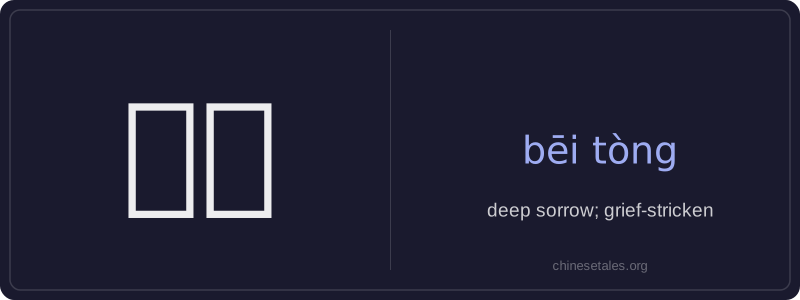
悲痛 (bēi tòng) expresses profound, heart-wrenching sorrow—stronger than ordinary sadness. The character 悲 means 'sorrow' or 'grief', often tied to loss or tragedy, while 痛 means 'pain' or 'ache', suggesting physical or emotional suffering. Together, they form a compound that conveys deep, visceral grief—the kind felt after the death of a loved one, a devastating failure, or irreversible loss. It’s commonly used in formal writing, news reports, memorial speeches, and solemn personal reflections.
Unlike milder terms like 难过 (nán guò, 'upset') or 伤心 (shāng xīn, 'heartbroken'), 悲痛 carries weight and gravity; it implies tears, silence, and emotional exhaustion. It can function as both a noun ('to feel deep sorrow') and an adjective ('a悲痛 moment'). While rarely used in casual daily chat, it appears frequently in literature, obituaries, and public expressions of collective mourning.
Example Sentences
Related Words
国语
‘Guó yǔ’ literally means 'national language'—
无论谁
‘无论谁’ (wú lùn shéi) is a pronoun meaning
外语
‘外语’ literally means ‘outside language’ —
面条
‘面条’ (miàn tiáo) literally means ‘flour str
不对
不对 (bù duì) literally combines 不 (bù), meani
认为
‘认为’ (rèn wéi) is a transitive verb meaning
认同
‘认同’ (tóng rèn) is a verb meaning ‘to ident
中学
'Zhōngxué' literally combines 'zhōng' (middle)