Word Explanation
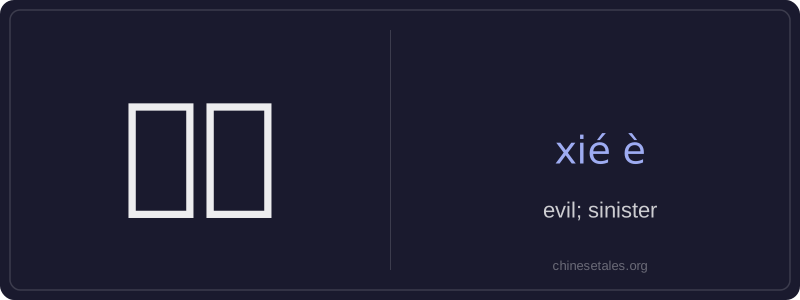
邪惡 (xié è) is an adjective meaning 'evil' or 'sinister', describing morally corrupt, malevolent, or threatening people, actions, or forces. The first character 邪 (xié) conveys 'deviant', 'unorthodox', or 'perverse', often implying departure from moral or natural order; the second character 恶 (è) means 'evil', 'wicked', or 'hateful', intensifying the negative moral weight. Together, they form a compound that emphasizes profound moral corruption — stronger and more dramatic than standalone 恶, often used in literary, dramatic, or formal contexts.
This word frequently appears in stories, films, news reports, or discussions about crime, corruption, or supernatural threats. It carries strong emotional and ethical judgment, rarely used lightly or humorously. While it can describe people (e.g., a villain), it’s also applied to abstract concepts like 'evil intent' or 'sinister influence'. It’s not used for everyday annoyances (e.g., a broken printer isn’t 邪恶) — reserve it for serious moral transgressions or ominous qualities.
Example Sentences
Related Words
国语
‘Guó yǔ’ literally means 'national language'—
无论谁
‘无论谁’ (wú lùn shéi) is a pronoun meaning
外语
‘外语’ literally means ‘outside language’ —
面条
‘面条’ (miàn tiáo) literally means ‘flour str
不对
不对 (bù duì) literally combines 不 (bù), meani
认为
‘认为’ (rèn wéi) is a transitive verb meaning
认同
‘认同’ (tóng rèn) is a verb meaning ‘to ident
中学
'Zhōngxué' literally combines 'zhōng' (middle)