Word Explanation
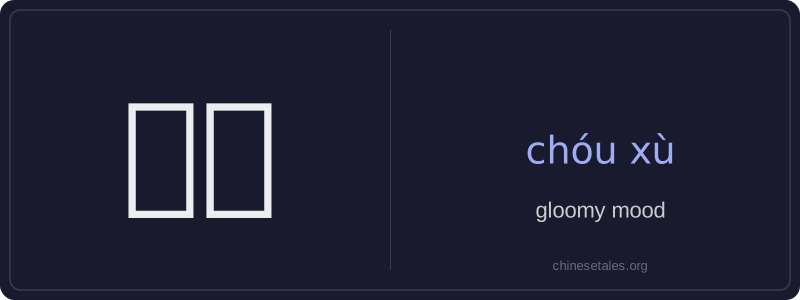
Chóu xù literally combines 愁 (chóu), meaning 'worry' or 'sorrow', and 绪 (xù), meaning 'thread' or 'mental state'. Together, they form a poetic noun describing a lingering, tangled feeling of sadness or melancholy — like emotional threads that coil and weigh on the heart. It conveys a quiet, introspective gloom rather than intense grief or acute anxiety.
This word is commonly used in literary, lyrical, or reflective contexts — in poetry, essays, song lyrics, or thoughtful speech — to evoke a subdued, atmospheric mood. It often appears with verbs like 消散 (to dissipate), 缠绕 (to entangle), or 笼罩 (to envelop), emphasizing its intangible yet pervasive quality. While not slang or overly formal, it leans slightly literary and is rarely used in casual spoken Chinese among young people.
Example Sentences
Related Words
国语
‘Guó yǔ’ literally means 'national language'—
无论谁
‘无论谁’ (wú lùn shéi) is a pronoun meaning
外语
‘外语’ literally means ‘outside language’ —
面条
‘面条’ (miàn tiáo) literally means ‘flour str
不对
不对 (bù duì) literally combines 不 (bù), meani
认为
‘认为’ (rèn wéi) is a transitive verb meaning
认同
‘认同’ (tóng rèn) is a verb meaning ‘to ident
中学
'Zhōngxué' literally combines 'zhōng' (middle)