Word Explanation
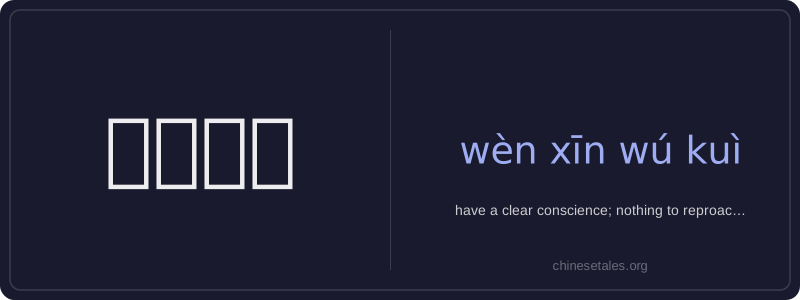
'Wèn xīn wú kuì' literally means 'to ask one's heart and find no shame.' It describes a state of moral self-assurance: after reflecting inwardly, a person feels no guilt or regret because their actions were honest, ethical, and aligned with their values. The four characters work together closely—'wèn' (ask/inquire), 'xīn' (heart/mind/conscience), 'wú' (without), and 'kuì' (shame/guilt)—forming an idiom rooted in Confucian self-cultivation and introspection.
This phrase is commonly used to express personal integrity, especially when defending one’s conduct or reassuring others (and oneself) about past decisions. It often appears in formal speech, written reflections, or moments of moral justification—not in casual chit-chat. While it conveys inner peace, it carries weight and sincerity; using it flippantly may sound arrogant or self-righteous. Native speakers tend to use it sparingly, usually when character, honesty, or accountability is at stake.
Example Sentences
Related Words
国语
‘Guó yǔ’ literally means 'national language'—
无论谁
‘无论谁’ (wú lùn shéi) is a pronoun meaning
外语
‘外语’ literally means ‘outside language’ —
面条
‘面条’ (miàn tiáo) literally means ‘flour str
不对
不对 (bù duì) literally combines 不 (bù), meani
认为
‘认为’ (rèn wéi) is a transitive verb meaning
认同
‘认同’ (tóng rèn) is a verb meaning ‘to ident
中学
'Zhōngxué' literally combines 'zhōng' (middle)