Word Explanation
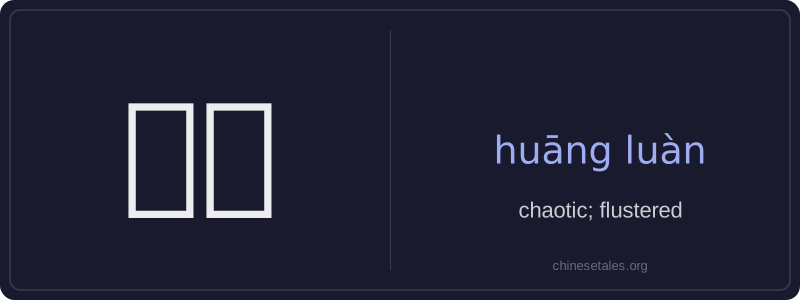
慌乱 (huāng luàn) is an adjective describing a state of mental or behavioral disarray caused by sudden stress, fear, or uncertainty — such as during emergencies, surprises, or overwhelming situations. The first character 慌 means 'flustered' or 'panicked', conveying emotional agitation; the second character 乱 means 'chaotic', 'disordered', or 'in confusion'. Together, they emphasize both the internal feeling and external manifestation: not just nervousness, but visible loss of composure — stumbling over words, rushing without thinking, or acting irrationally.
This word is commonly used to describe people’s reactions in urgent or unpredictable contexts: natural disasters, accidents, unexpected news, or high-pressure exams. It carries a slightly negative connotation, suggesting a lack of calm control. While it can modify nouns (e.g., 慌乱的情绪 'a flustered mood'), it most frequently appears in predicative or adverbial positions — often after verbs like 显得 ('appear'), 变得 ('become'), or 跑得 ('run so that...'). It is more literary than colloquial but remains widely understood and used in both spoken and written Chinese.
Example Sentences
Related Words
国语
‘Guó yǔ’ literally means 'national language'—
无论谁
‘无论谁’ (wú lùn shéi) is a pronoun meaning
外语
‘外语’ literally means ‘outside language’ —
面条
‘面条’ (miàn tiáo) literally means ‘flour str
不对
不对 (bù duì) literally combines 不 (bù), meani
认为
‘认为’ (rèn wéi) is a transitive verb meaning
认同
‘认同’ (tóng rèn) is a verb meaning ‘to ident
中学
'Zhōngxué' literally combines 'zhōng' (middle)