Word Explanation
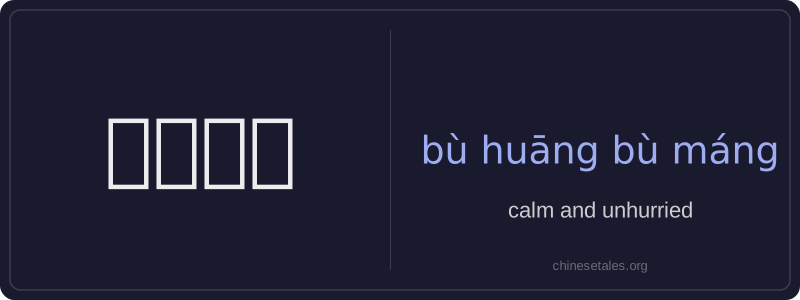
‘Bù huāng bù máng’ is a reduplicative four-character idiom meaning ‘calm and unhurried’—describing someone who remains composed, deliberate, and free from anxiety or haste, even under pressure. The structure repeats ‘not’ (bù) before two negative states: ‘huāng’ (panic, fluster) and ‘máng’ (busy, rushed). By negating both extremes, it emphasizes balanced, steady composure. It often conveys quiet confidence, maturity, or practiced skill.
This phrase is commonly used to describe behavior in everyday situations—like handling work tasks, responding to questions, or moving through a crowded space. It carries a positive, respectful connotation, suggesting emotional regulation and self-possession. While it can modify verbs (adverbially) or stand as a predicate (adjectivally), it rarely appears attributively before nouns without additional phrasing (e.g., ‘不慌不忙的样子’). It’s frequent in spoken and written Chinese, especially in descriptive narration or character portrayal.
Example Sentences
Related Words
国语
‘Guó yǔ’ literally means 'national language'—
无论谁
‘无论谁’ (wú lùn shéi) is a pronoun meaning
外语
‘外语’ literally means ‘outside language’ —
面条
‘面条’ (miàn tiáo) literally means ‘flour str
不对
不对 (bù duì) literally combines 不 (bù), meani
认为
‘认为’ (rèn wéi) is a transitive verb meaning
认同
‘认同’ (tóng rèn) is a verb meaning ‘to ident
中学
'Zhōngxué' literally combines 'zhōng' (middle)