Word Explanation
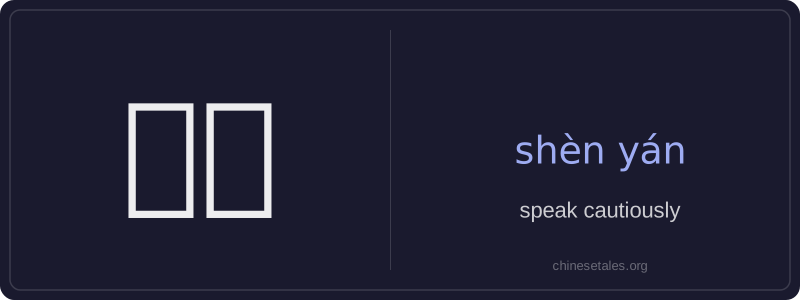
慎言 literally means 'cautious speech' — 慎 (shèn) means 'cautious, careful, prudent', and 言 (yán) means 'to speak' or 'speech'. Together, they form a compound verb meaning to choose words carefully, avoid rash or impulsive statements, and consider the consequences before speaking. It reflects a Confucian value emphasizing self-restraint, respect for others, and awareness of social harmony.
This term is commonly used in formal, reflective, or advisory contexts — such as advice from elders, workplace communication guidelines, or discussions about interpersonal ethics. While it can appear as a standalone verb (e.g., 他为人慎言), it’s often found in phrases like 慎言慎行 (speak and act cautiously) or as part of admonitions like 请慎言. It carries a slightly solemn or mature tone, implying wisdom and emotional maturity rather than mere silence.
Example Sentences
Related Words
国语
‘Guó yǔ’ literally means 'national language'—
无论谁
‘无论谁’ (wú lùn shéi) is a pronoun meaning
外语
‘外语’ literally means ‘outside language’ —
面条
‘面条’ (miàn tiáo) literally means ‘flour str
不对
不对 (bù duì) literally combines 不 (bù), meani
认为
‘认为’ (rèn wéi) is a transitive verb meaning
认同
‘认同’ (tóng rèn) is a verb meaning ‘to ident
中学
'Zhōngxué' literally combines 'zhōng' (middle)