Word Explanation
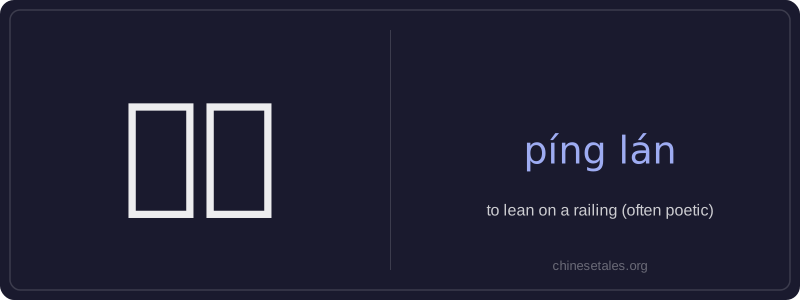
‘凭栏’ literally means ‘to lean on (or rest one’s hands on) a railing’. The character 凭 (píng) means ‘to lean on’, ‘to rely on’, or ‘to rest against’, while 栏 (lán) means ‘railing’, ‘balustrade’, or ‘fence’. Together, they form a compact, literary verb expressing a quiet, contemplative posture—often evoking scenes of gazing into the distance from a balcony, bridge, or riverside platform.
This phrase is rarely used in casual spoken Chinese; it appears predominantly in poetry, classical-style prose, and descriptive writing. It carries a subtle emotional tone—sometimes wistful, melancholic, or serene—and frequently implies reflection, longing, or appreciation of scenery. You’ll encounter it in contexts involving mountains, rivers, ancient pavilions, or city views at dusk or dawn. Though grammatically a verb, it functions as an intransitive action and usually appears without an object.
Example Sentences
Related Words
国语
‘Guó yǔ’ literally means 'national language'—
无论谁
‘无论谁’ (wú lùn shéi) is a pronoun meaning
外语
‘外语’ literally means ‘outside language’ —
面条
‘面条’ (miàn tiáo) literally means ‘flour str
不对
不对 (bù duì) literally combines 不 (bù), meani
认为
‘认为’ (rèn wéi) is a transitive verb meaning
认同
‘认同’ (tóng rèn) is a verb meaning ‘to ident
违规
违规 (wéi guī) literally means 'to violate rules