Word Explanation
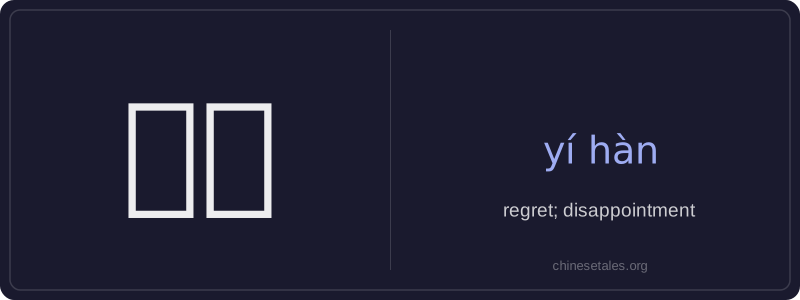
遗憾 (yí hàn) expresses a feeling of regret or disappointment—often about something that has already happened and cannot be changed. The character 遗 (yí) means 'to lose' or 'to leave behind', while 憾 (hàn) means 'to feel sorrowful or distressed'. Together, they convey the sense of 'a sorrowful loss' or 'a lingering sense of what was missed'. It’s commonly used in both spoken and written Chinese to describe personal feelings (e.g., missing an opportunity) or empathetic reactions (e.g., expressing sympathy for someone else’s misfortune).
This word carries a gentle, reflective tone—not as intense as 悲伤 (sadness) or 怨恨 (resentment), but more poignant than 失望 (disappointment). It often appears after verbs like 感到, 觉得, or 留下, and can function as either a noun ('a regret') or an adjective ('regrettable'). It’s frequently used in formal speech, letters, and media to express polite, restrained emotion.
Example Sentences
Related Words
国语
‘Guó yǔ’ literally means 'national language'—
无论谁
‘无论谁’ (wú lùn shéi) is a pronoun meaning
外语
‘外语’ literally means ‘outside language’ —
面条
‘面条’ (miàn tiáo) literally means ‘flour str
不对
不对 (bù duì) literally combines 不 (bù), meani
认为
‘认为’ (rèn wéi) is a transitive verb meaning
认同
‘认同’ (tóng rèn) is a verb meaning ‘to ident
违规
违规 (wéi guī) literally means 'to violate rules