Word Explanation
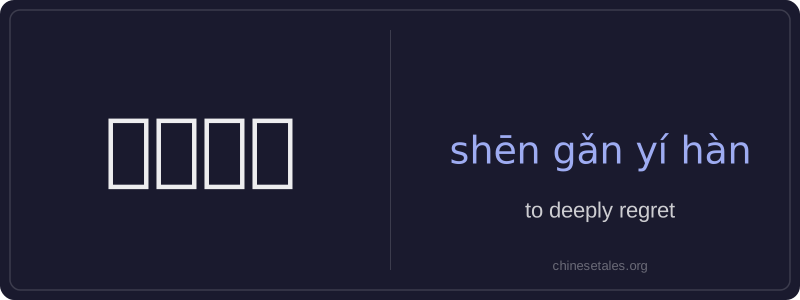
深感遗憾 is a formal, written verb phrase meaning 'to deeply regret' or 'to feel profound regret'. It combines four characters: 深 (shēn) meaning 'deep', 感 (gǎn) meaning 'to feel', 遗 (yí) meaning 'left behind' or 'lost', and 憾 (hàn) meaning 'regret' or 'sorrow'. Together, they convey an intense, sincere sense of remorse — stronger than just 遗憾 ('regret') alone. The phrase emphasizes emotional depth and gravity, often implying responsibility, loss, or missed opportunity.
This expression is commonly used in official announcements, apology letters, news reports, or diplomatic contexts — for example, when expressing sorrow over someone’s death, a policy failure, or an unavoidable cancellation. It rarely appears in casual speech; native speakers typically use simpler alternatives like 很遗憾 or 真可惜 in everyday conversation. Its tone is respectful, somber, and empathetic, making it especially appropriate when addressing serious or sensitive matters.
Example Sentences
Related Words
国语
‘Guó yǔ’ literally means 'national language'—
无论谁
‘无论谁’ (wú lùn shéi) is a pronoun meaning
外语
‘外语’ literally means ‘outside language’ —
面条
‘面条’ (miàn tiáo) literally means ‘flour str
不对
不对 (bù duì) literally combines 不 (bù), meani
认为
‘认为’ (rèn wéi) is a transitive verb meaning
认同
‘认同’ (tóng rèn) is a verb meaning ‘to ident
违规
违规 (wéi guī) literally means 'to violate rules