Word Explanation
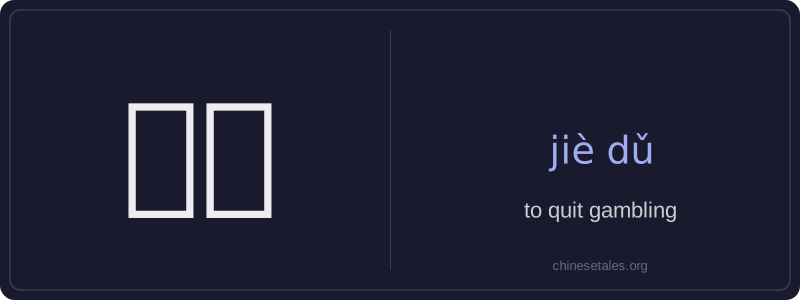
戒赌 (jiè dǔ) literally means 'to戒 (abstain from, quit) gambling (dǔ)'. The character 戒 carries the sense of self-discipline, prohibition, or breaking a harmful habit; 赌 means gambling — any activity involving betting money or valuables on uncertain outcomes. Together, 戒赌 refers specifically to the act or process of quitting gambling, often as part of recovery from gambling addiction. It implies conscious effort, commitment, and sometimes external support.
This term is commonly used in public health campaigns, counseling contexts, family discussions, and personal resolutions. It’s not merely about stopping one instance of gambling but committing to long-term behavioral change. While it can appear as a noun ('his戒赌 journey'), its primary grammatical function is verbal — it typically follows subjects and precedes objects or complements (e.g., 戒赌成功, 'successfully quit gambling'). It’s more formal and weighty than casual alternatives like 不赌了 ('I’m not gambling anymore').
Example Sentences
Related Words
国语
‘Guó yǔ’ literally means 'national language'—
无论谁
‘无论谁’ (wú lùn shéi) is a pronoun meaning
外语
‘外语’ literally means ‘outside language’ —
面条
‘面条’ (miàn tiáo) literally means ‘flour str
不对
不对 (bù duì) literally combines 不 (bù), meani
认为
‘认为’ (rèn wéi) is a transitive verb meaning
认同
‘认同’ (tóng rèn) is a verb meaning ‘to ident
违规
违规 (wéi guī) literally means 'to violate rules