Word Explanation
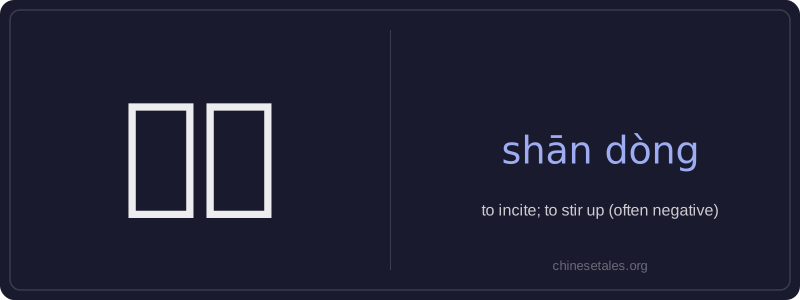
煽动 (shān dòng) is a verb meaning 'to incite' or 'to stir up' strong emotions—especially anger, fear, hatred, or unrest—in a group of people. The first character 煽 (shān) originally means 'to fan' (as in fanning a fire), and the second character 动 (dòng) means 'to move' or 'to stir'. Together, they vividly evoke the image of fanning flames—suggesting deliberate, often manipulative, action to intensify existing feelings or provoke collective reaction. It carries a strong negative connotation and is almost always used in formal, political, legal, or media contexts.
This word implies intentionality and responsibility: the subject actively spreads rhetoric, misinformation, or emotional appeals to provoke harmful behavior or social instability. It’s commonly paired with nouns like 民众 (the public), 群众 (the masses), or 暴力 (violence). Because of its serious implications, 煽动 appears frequently in laws (e.g., 煽动颠覆国家政权 — 'inciting subversion of state power') and news reports about unrest, extremism, or online disinformation campaigns.
Example Sentences
Related Words
国语
‘Guó yǔ’ literally means 'national language'—
无论谁
‘无论谁’ (wú lùn shéi) is a pronoun meaning
外语
‘外语’ literally means ‘outside language’ —
面条
‘面条’ (miàn tiáo) literally means ‘flour str
不对
不对 (bù duì) literally combines 不 (bù), meani
认为
‘认为’ (rèn wéi) is a transitive verb meaning
认同
‘认同’ (tóng rèn) is a verb meaning ‘to ident
违规
违规 (wéi guī) literally means 'to violate rules