Word Explanation
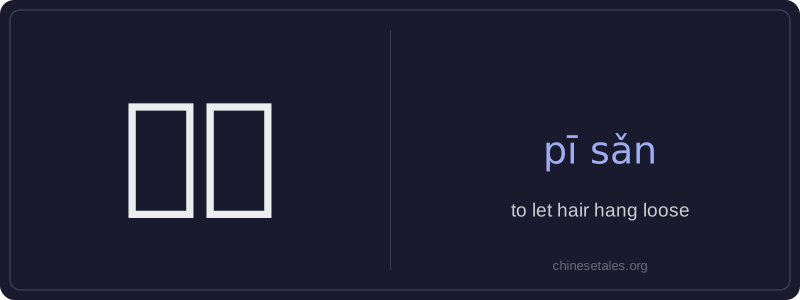
披散 (pī sǎn) is a verb meaning 'to let one's hair hang loose' — typically describing hair that falls freely over the shoulders or back, unbound and untied. The first character 披 (pī) conveys the idea of spreading out or draping over something, like a cloak; the second character 散 (sǎn) means 'to scatter' or 'to disperse', suggesting looseness and lack of constraint. Together, they vividly evoke the visual and physical state of unrestrained, flowing hair.
This word is commonly used in descriptive writing — especially in literature, poetry, or everyday observations about appearance — to convey naturalness, relaxation, or even emotional states like fatigue or carefree abandon. It often appears with subjects like 她 (tā, 'she'), 长发 (cháng fà, 'long hair'), or 头发 (tóu fà, 'hair') and frequently pairs with verbs like 拥有 (yǒng yǒu, 'to have'), 看起来 (kàn qǐ lái, 'to look'), or 任由 (rèn yóu, 'to allow'). It’s not used for short or styled hair, nor for hair tied up or clipped.
Example Sentences
Related Words
国语
‘Guó yǔ’ literally means 'national language'—
无论谁
‘无论谁’ (wú lùn shéi) is a pronoun meaning
外语
‘外语’ literally means ‘outside language’ —
面条
‘面条’ (miàn tiáo) literally means ‘flour str
不对
不对 (bù duì) literally combines 不 (bù), meani
认为
‘认为’ (rèn wéi) is a transitive verb meaning
认同
‘认同’ (tóng rèn) is a verb meaning ‘to ident
违规
违规 (wéi guī) literally means 'to violate rules