Word Explanation
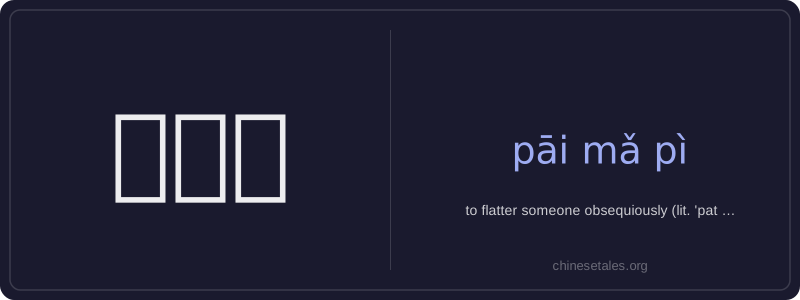
'Pāi mǎ pì' literally means 'to pat a horse’s butt'—a vivid, humorous idiom rooted in ancient Chinese equestrian culture. Historically, servants or subordinates would pat the rear of their master’s horse to show devotion and curry favor; over time, the action metaphorically shifted to describe insincere, exaggerated praise directed at people in power or authority. The phrase carries strong negative connotations, implying flattery that is obvious, self-serving, and lacking authenticity.
This verb is commonly used in informal spoken and written Chinese—especially in critiques of workplace behavior, politics, or social interactions where someone tries too hard to please a superior. It’s rarely used in formal or respectful contexts, and almost never as a self-description (saying 'I’m pāi mǎ pì' sounds sarcastic or self-deprecating). While the characters individually mean 'pat', 'horse', and 'butt', the compound functions as a fixed, idiomatic unit—the meaning cannot be deduced from its parts alone.
Example Sentences
Related Words
国语
‘Guó yǔ’ literally means 'national language'—
无论谁
‘无论谁’ (wú lùn shéi) is a pronoun meaning
外语
‘外语’ literally means ‘outside language’ —
面条
‘面条’ (miàn tiáo) literally means ‘flour str
不对
不对 (bù duì) literally combines 不 (bù), meani
认为
‘认为’ (rèn wéi) is a transitive verb meaning
认同
‘认同’ (tóng rèn) is a verb meaning ‘to ident
违规
违规 (wéi guī) literally means 'to violate rules