Word Explanation
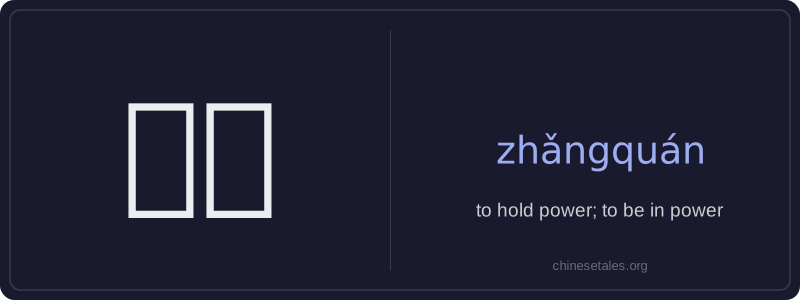
‘掌权’ is a verb meaning ‘to hold power’ or ‘to be in power’, typically referring to occupying a position of political, organizational, or institutional authority. The first character, 掌 (zhǎng), literally means ‘to control’, ‘to manage’, or ‘to preside over’ — as in 掌握 (zhǎngwò, ‘to master’ or ‘to have control over’). The second character, 权 (quán), means ‘power’, ‘authority’, or ‘jurisdiction’. Together, 掌权 emphasizes the active exercise of formal decision-making authority, not just influence or informal leadership.
This term is commonly used in contexts involving government, party leadership, corporate management, or historical narratives about regime changes. It carries a neutral-to-formal register and is rarely used for everyday personal influence — e.g., you wouldn’t say a parent ‘掌权’ over their children. It often appears in news reports, academic texts, and political commentary, especially when discussing shifts in leadership or consolidation of control.
Example Sentences
Related Words
国语
‘Guó yǔ’ literally means 'national language'—
无论谁
‘无论谁’ (wú lùn shéi) is a pronoun meaning
外语
‘外语’ literally means ‘outside language’ —
面条
‘面条’ (miàn tiáo) literally means ‘flour str
不对
不对 (bù duì) literally combines 不 (bù), meani
认为
‘认为’ (rèn wéi) is a transitive verb meaning
认同
‘认同’ (tóng rèn) is a verb meaning ‘to ident
违规
违规 (wéi guī) literally means 'to violate rules