Word Explanation
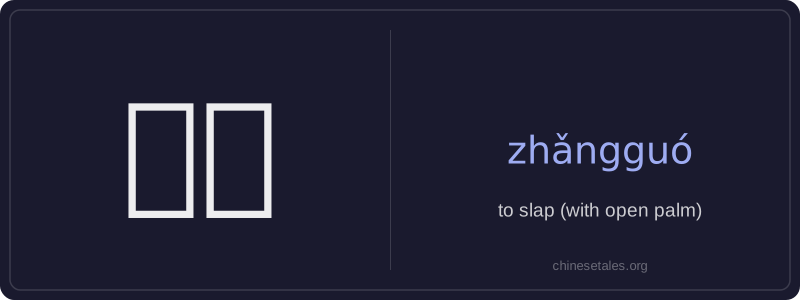
掌掴 is a verb meaning 'to slap (someone) forcefully with the open palm of the hand.' It combines two characters: 掌 (zhǎng), meaning 'palm of the hand,' and 揣 (guó), an archaic or literary verb meaning 'to strike' or 'to hit sharply.' Together, they form a compound that emphasizes the physical action of striking with the palm — not with fingers clenched (which would be 拳打, 'punching') nor with the back of the hand (which is 扇耳光). The word carries strong emotional connotations, often implying anger, humiliation, punishment, or sudden outrage.
It appears frequently in literature, film scripts, and formal or dramatic speech. While grammatically transitive, it usually requires a direct object (e.g., 掌掴他), and it’s rarely used in casual daily conversation — native speakers more commonly say 打耳光 or just 扇 in informal contexts. Its tone is emphatic and vivid, making it especially effective in descriptive or narrative writing where physical intensity matters.
Example Sentences
Related Words
国语
‘Guó yǔ’ literally means 'national language'—
无论谁
‘无论谁’ (wú lùn shéi) is a pronoun meaning
外语
‘外语’ literally means ‘outside language’ —
面条
‘面条’ (miàn tiáo) literally means ‘flour str
不对
不对 (bù duì) literally combines 不 (bù), meani
认为
‘认为’ (rèn wéi) is a transitive verb meaning
认同
‘认同’ (tóng rèn) is a verb meaning ‘to ident
违规
违规 (wéi guī) literally means 'to violate rules